Turning incidents into insights with Synergi Life and Event Learning Taxonomy
Event Learning Taxonomy enhances Synergi Life, DNV's HSE and risk management software, by supporting learning from everyday events rather than assigning blame.
Event Learning Taxonomy, also known as CLUE (Contextual Learning and Understanding of Events), helps organisations learn from incidents by focusing on the conditions that influenced what happened, rather than reducing events to simple causes or individual errors. Using neutral, descriptive language and a limited set of contributing factors, it supports more consistent reporting and helps reduce the focus on naming, blaming, shaming, and retraining. Rather than asking “Who failed?”, Event Learning Taxonomy supports a deeper understanding of what made actions reasonable at the time, providing a stronger foundation for learning, improvement, and decision making.
Strengthened learning is a key part of Equinor’s safety roadmap. For better learning, we need to tell better stories. CLUE (Event Learning Taxonomy) helps us do that. It not only modernizes incident analysis, but also simplifies it. This will help us get better data, and ultimately better insight into areas that need improvement.
Per Henry Gonsholt
VP Safety
Equinor
Event Learning Taxonomy in Synergi Life: from reporting to learning
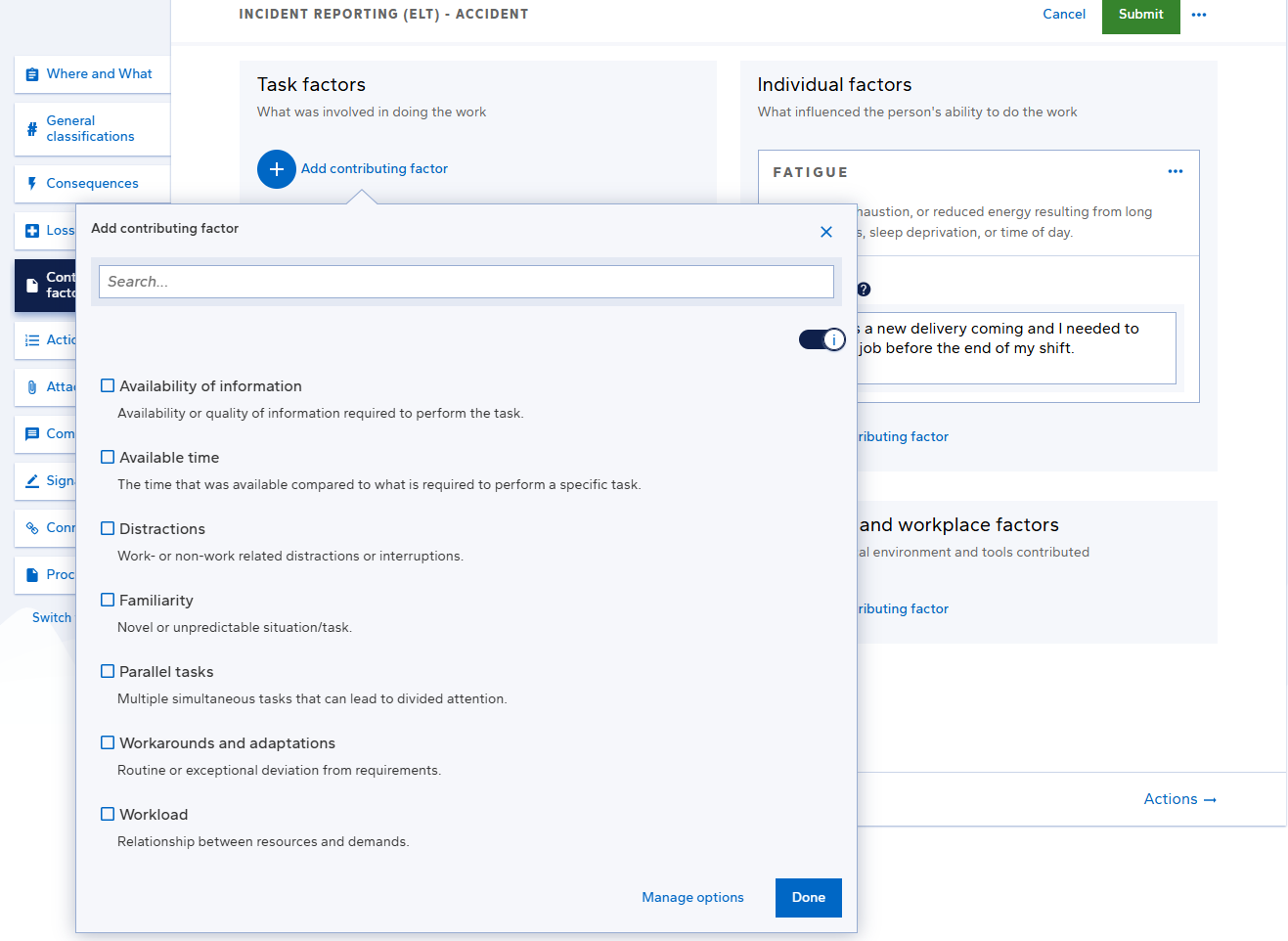
Event Learning Taxonomy is designed to work inside the flow of incident reporting, not alongside it. In Synergi Life, users select contributing factors while registering an incident or event case, as part of the normal workflow.
Instead of asking users to find a single cause or decide who failed, Synergi Life helps them describe the conditions that influenced the event. These may relate to the task, the individual’s situation, organisational priorities, or equipment and workplace conditions. More than one factor can apply, and that is expected.
Without a simple, consistent, and neutral taxonomy, reporting becomes fragmented, analysis is less reliable, and improvement actions tend to focus on retraining or supervision instead of addressing underlying system conditions.
Move from blame-oriented reporting to learning-focused incident analysis | Watch the webinar
How this influences actions and improvement
How events are described shapes the actions that follow. When contributing factors highlight system conditions, improvement actions are more likely to address planning, coordination, interfaces, resourcing, or organisational expectations, rather than defaulting to retraining or reminders. This helps organisations prioritise improvements based on patterns, not isolated cases.
Supporting everyday use, at scale
Event Learning Taxonomy in Synergi Life is designed for everyday events, where most learning opportunities exist. By using it in the system people already rely on, organisations can move beyond basic incident recording and strengthen learning and improvement over time.
Learn more about Event Learning Taxonomy and Synergi Life