From causes to context: How Event Learning Taxonomy supports learning in a HOP-informed world

Supporting a more accurate and balanced understanding of events with Event Learning Taxonomy

For many organisations, incident investigations still rely on identifying “causes”. While this approach may appear logical, it often oversimplifies complex situations and unintentionally shifts attention towards individual actions rather than the conditions in which work takes place. As Human and Organisational Performance (HOP) thinking continues to gain traction, organisations are increasingly questioning whether traditional cause-based models truly support learning and improvement. 

Event Learning Taxonomy was developed to address this challenge. Rather than asking what caused the event, Event Learning Taxonomy helps organisations understand what influenced it - and why actions made sense to people at the time.
Moving beyond causes to contributing factors

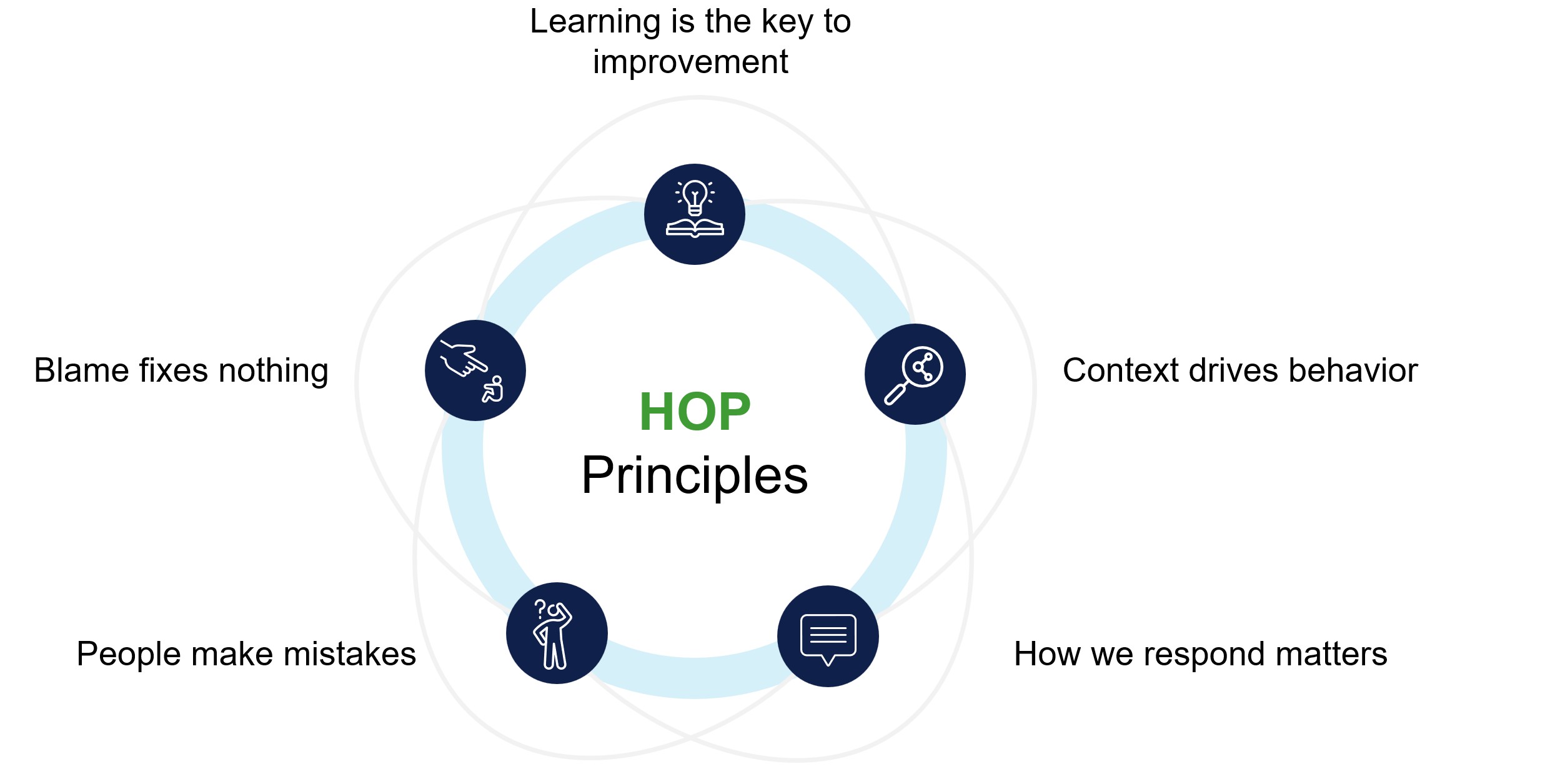
HOP principles recognise that people generally aim to do a good job, and that outcomes are shaped by a combination of system conditions, constraints, and interactions. In this context, searching for a single root cause can be misleading. It risks reducing complex situations to simplified explanations and can unintentionally reinforce blame.

HOP principles diagram
The five HOP principles

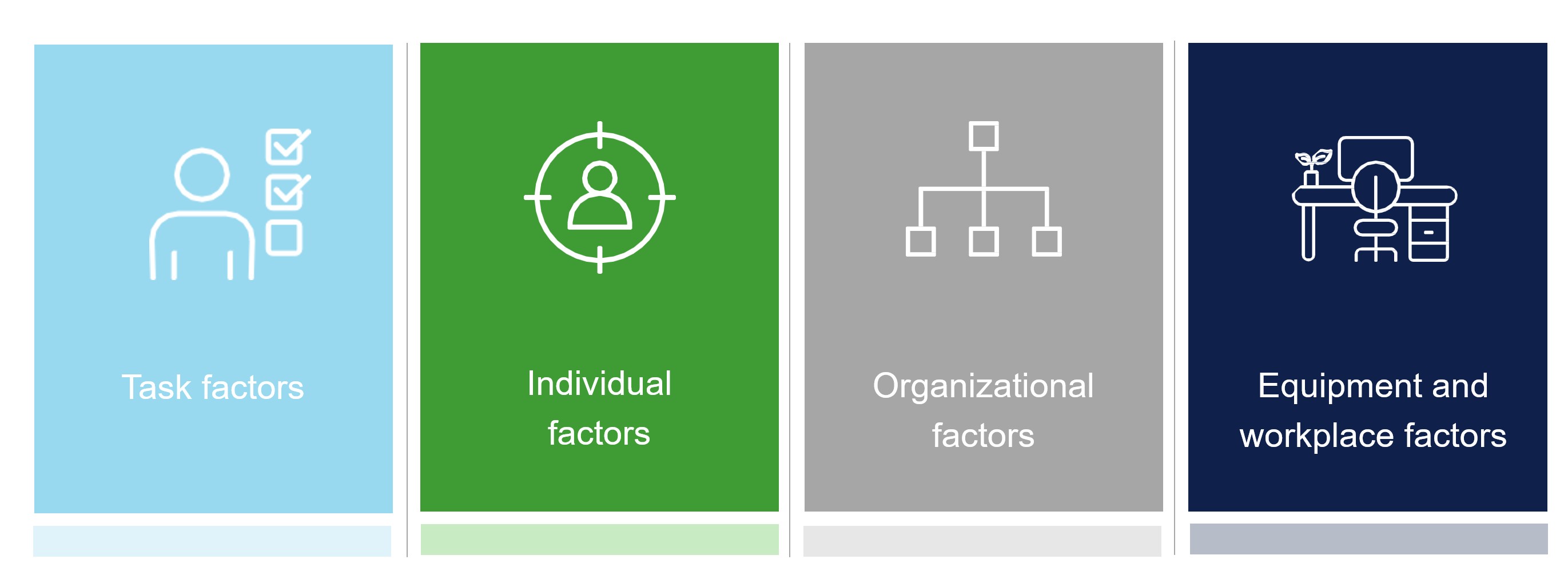
Event Learning Taxonomy reflects this shift by moving from causes to contributing factors. Contributing factors describe the conditions that influenced how work was carried out, such as workload, information quality, task design, coordination, or organisational priorities. Importantly, more than one contributing factor can apply to an event, acknowledging the complexity of real work. 

By focusing on contributing factors rather than causes, Event Learning Taxonomy supports a more accurate and balanced understanding of events. It encourages organisations to look beyond individual behaviour and towards the system conditions that shape performance.

How language influences learning

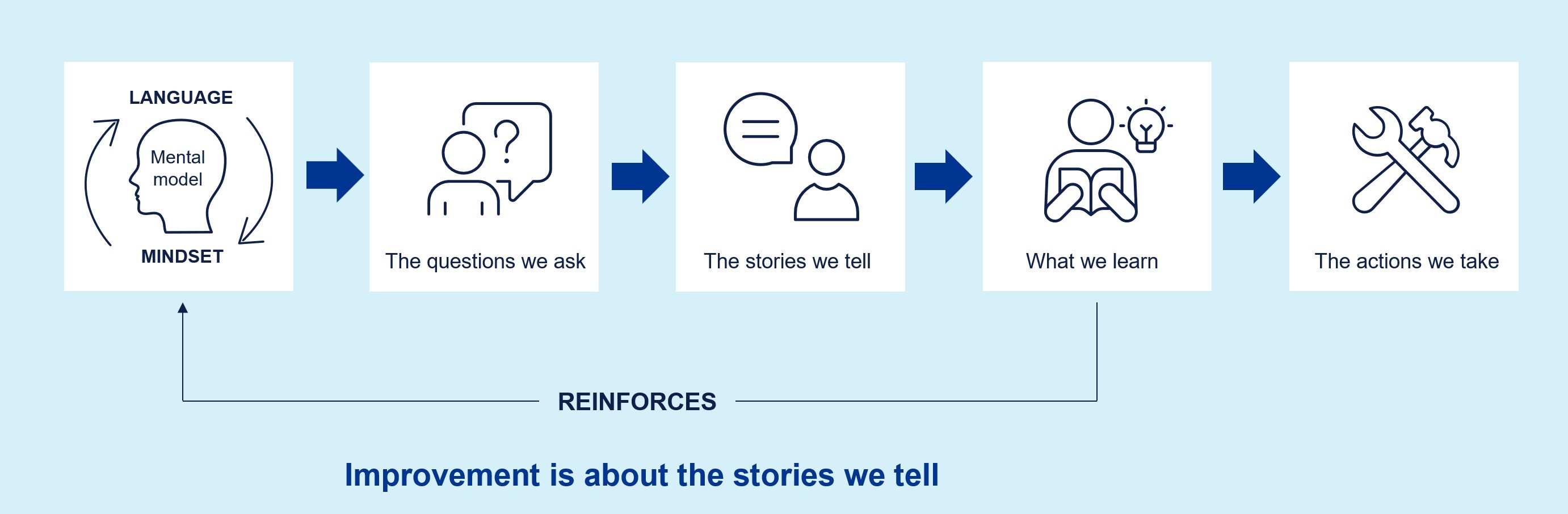
Language plays a critical role in how incidents are understood and discussed. Traditional taxonomies often rely on deficit-based terms such as “failure to follow procedure” or “lack of competence”. While these labels may seem neutral, they often frame events in a way that directs attention towards individual shortcomings.

Event Learning Taxonomy uses neutral, descriptive language designed to support learning rather than judgement. This aligns closely with HOP thinking, where the goal is to understand why actions were reasonable in context, not to assess whether they complied with expectations in hindsight. 

When language shifts, behaviour follows. Neutral language lowers the threshold for open reporting, improves the quality of information captured, and creates a safer space for reflection and learning. 

Improving learning from everyday events

Most learning opportunities do not come from major accidents, but from everyday incidents, near misses, and deviations. These events are frequent, but they are often reported inconsistently and analysed superficially, especially when classification systems are complex or unclear.

CLUE structure
  The four categories of contributing factors

Event Learning Taxonomy is designed specifically for these low and medium-severity events. Its single-layer structure and clear contributing factors make it easier for users to describe what influenced an event without navigating multiple levels of causation.

In practice, this leads to:

  • More consistent and accurate incident data 
  • Better visibility of recurring system conditions 
  • Earlier identification of patterns and weak signals 
  • Stronger organisational learning over time 

This shift from compliance-driven reporting to learning focused reporting is a core ambition of both Event Learning Taxonomy and HOP.

From better learning to better actions

How incidents are classified directly influences the actions that follow. When investigations focus on individual error, actions often default to retraining, reminders, or increased supervision. While these responses may feel reassuring, they rarely address the underlying conditions that shaped the event. 

By highlighting contributing factors, Event Learning Taxonomy supports more effective action selection. Two examples illustrate how this shift changes the type of actions organisations take.

Example 1: Moving beyond retraining

In a traditional cause-based model, an incident might be classified as “failure to follow procedure”. The resulting action is often refresher training or a reminder to comply with existing rules. 

Using Event Learning Taxonomy (CLUE), the same event may reveal contributing factors such as time pressure, conflicting priorities, or unclear procedures. Instead of retraining individuals, actions are more likely to focus on improving task design, clarifying expectations, or adjusting how work is planned and resourced. This addresses the conditions that made the deviation reasonable at the time, rather than reinforcing rules that may already be difficult to apply in practice.

Example 2: Improving systems rather than supervision

An incident involving incorrect equipment use is often followed by actions such as increased supervision or competence checks. While these actions target individuals, they may overlook why the situation arose. 

With Event Learning Taxonomy, contributing factors might highlight issues such as equipment design, poor usability, interface confusion, or workplace layout. Actions can then focus on improving equipment selection, redesigning interfaces, or modifying the physical environment. These system-level changes reduce the likelihood of similar events recurring, without increasing reliance on supervision or enforcement. 

Supporting HOP in practice, not just in principle

Synergi Life Event Learning Taxonomy - reinforcing
  The importance of reinforcing HOP and Event Learning Taxonomy

Many organisations support HOP in theory, but struggle to operationalise it in everyday processes. Event Learning Taxonomy helps bridge this gap by embedding HOP-aligned thinking directly into incident reporting and learning practices. 

Rather than requiring a separate methodology or specialist analysis, Event Learning Taxonomy provides a practical structure that can be used consistently across sites and teams. This makes it easier to apply HOP principles at scale and over time. 

Digital enablement of learning

Digital enablement of learning software
  Event Learning Taxonomy in Synergi Life

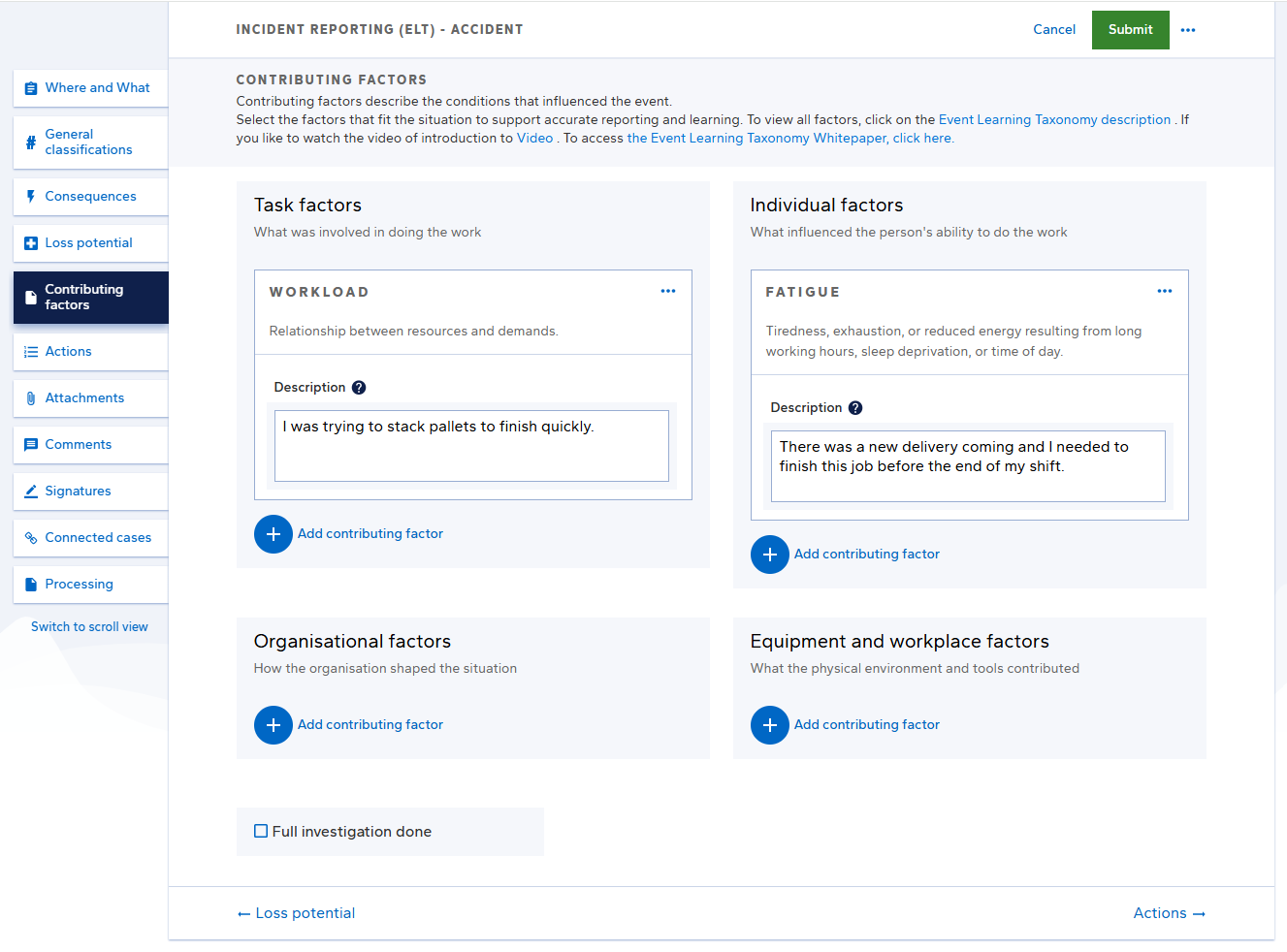
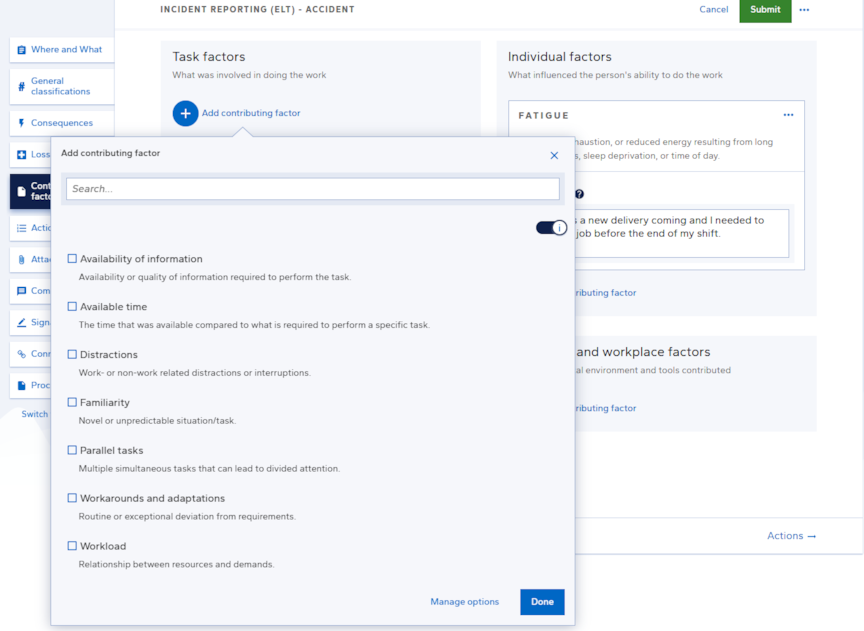
To be effective, learning frameworks must fit into the systems people already use. Event Learning Taxonomy is designed to be implemented within digital incident management solutions, where contributing factors can be selected as part of the reporting workflow.

In platforms such as Synergi Life, Event Learning Taxonomy supports consistent classification, easier reporting for users, and more reliable data for learning and analysis without adding complexity to the reporting experience. This allows organisations to move from recording incidents to actively learning from them, supported by both methodology and system design.


Digital enablement of learning

Learning as a capability

Ultimately, Event Learning Taxonomy are not about replacing investigations or removing accountability. They are about strengthening an organisation’s ability to learn. By shifting the focus from causes to context, from blame to understanding, and from isolated fixes to system-level improvement, organisations can build a more resilient foundation for performance. 

This is the essence of HOP in practice - and where Event Learning Taxonomy provides a concrete, usable step forward.

Learn more about CLUE

Synergi Life users and colleagues talk in DNV office

Discover how Synergi Life can support your organization

Synergi Life, DNV’s EHS and quality, risk management and ESG software, empowers organizations to proactively identify and mitigate risks, comply with regulations, and improve their operations.