The UK must move faster on flexibility to close the net zero gap

As the UK accelerates towards a cleaner energy system, one theme is becoming impossible to ignore: flexibility is no longer a supporting feature, it is the backbone of a resilient, affordable, and decarbonized system.
Our latest Energy Transition Outlook UK (ETO UK) shows just how dramatically the UK’s flexibility needs will grow. With variable renewable capacity expected to reach 107 GW by 2030 and increase six fold by 2060, hourly variability in the power system will triple.
- Wind generation grows nearly five-fold from 110 TWh/yr in 2024 to about 550 TWh/yr in 2060.
- Solar generation will experience a 10-fold increase in solar generation, from around 15 TWh/yr today to 170 TWh/yr by 2060.
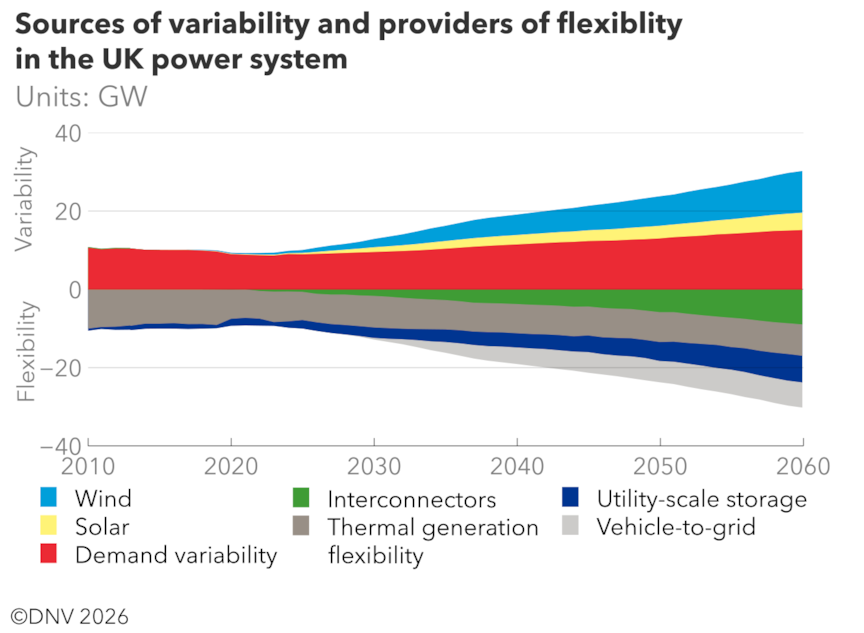
Today, system flexibility comes from highly responsive gas-fired generation, supplemented by storage and interconnectors. Our forecast shows that beyond 2050, this picture will flip with 75% of flexibility relying on use of battery storage and interconnectors, with still a question mark on how much dispatchable generation capacity must be available to handle long periods of low wind generation.
Hari Vamadevan, DNV regional director, UK&I, notes, “the energy system is still very reliant on fossil fuels in the short-term. Long-term energy security will rest not on imported fuels but on domestic generation, storage, and flexible demand. The economy will run on clean electrons rather than molecules, with energy system carbon emissions reaching net zero by 2060.
“Long-term efficiency gains, linked mainly to electrification, will support a 25% drop in energy demand by 2050. UK final energy demand will no longer grow in lockstep with GDP and population growth. Flexibility must come from integrated solutions across technology, infrastructure, policy, and behaviour.”
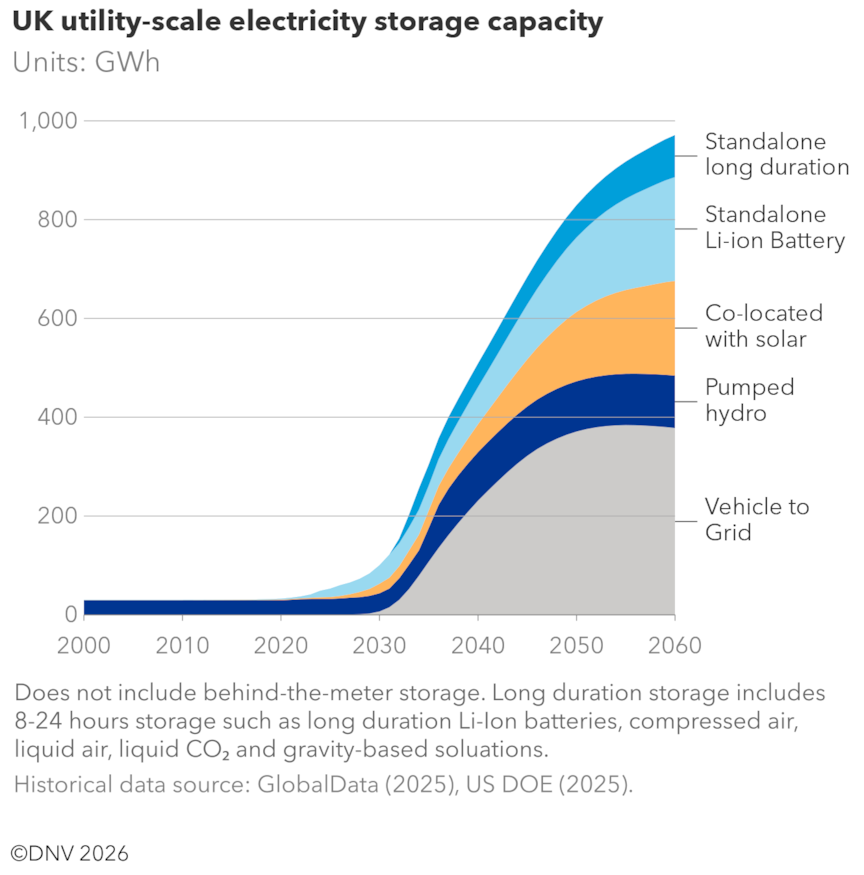
- Close to 45% of required system flexibility in 2060 will be provided by utility-scale storage (batteries and pumped hydro) combined with use of car batteries through vehicle-to-grid arrangements.
- The increase of VRES generation capacity will more than treble Interconnectors, with other power grids outside the UK providing 30% of the required flexibility - both in terms of exporting excess supply to the continent during times of high VRES generation or supplying backup power to the UK during supply shortages.
Change needed
Achieving flexibility in energy systems requires infrastructure upgrades and investment in automation and analytics. Enhanced forecasting for renewable generation and demand response enables better management of surplus energy and shifts consumption from peak periods.
New market frameworks must incentivize flexible thermal plant operation, while smart grid technologies optimize energy flows. The 'prosumer' model - combining production and consumption - allows consumers to provide flexibility through demand response, vehicle-to-grid integration, and behind-the-meter storage, reshaping the energy landscape.
UK energy storage is set for strong growth to enable the rapidly changing energy generation and demand landscape. Lithium-ion utility-scale battery storage facilities have grown rapidly in the UK over the past few years, providing almost three-quarters of the power storage capacity available to the grid today. This growth is expected to continue through to 2060, reaching 160 GW of power and 400 GWh of energy storage capacity.
Response from the market
At the Energy Transition Outlook UK 2026 launch event in London, this message resonated across sectors.
Claire Dykta of NESO captured the challenge succinctly: “If we think about the energy system historically, we had a highly flexible gas system serving the needs of the country. As we move forward into the future that flexibility needs to come from somewhere else…and the report does a really good job of bringing that out.”
NESO’s perspective is uniquely system wide. From long term planning to real time operation, the organisation sees first hand how the shift from gas based flexibility to storage, interconnectors, and demand side response will redefine system operation. As Claire explains, “We are in a really privileged position, where we’re thinking day-in-day-out about the transition and how we balance across affordability, sustainability, and resilience.”