CO₂ on Track
Developing best practices in CO₂ transport by train
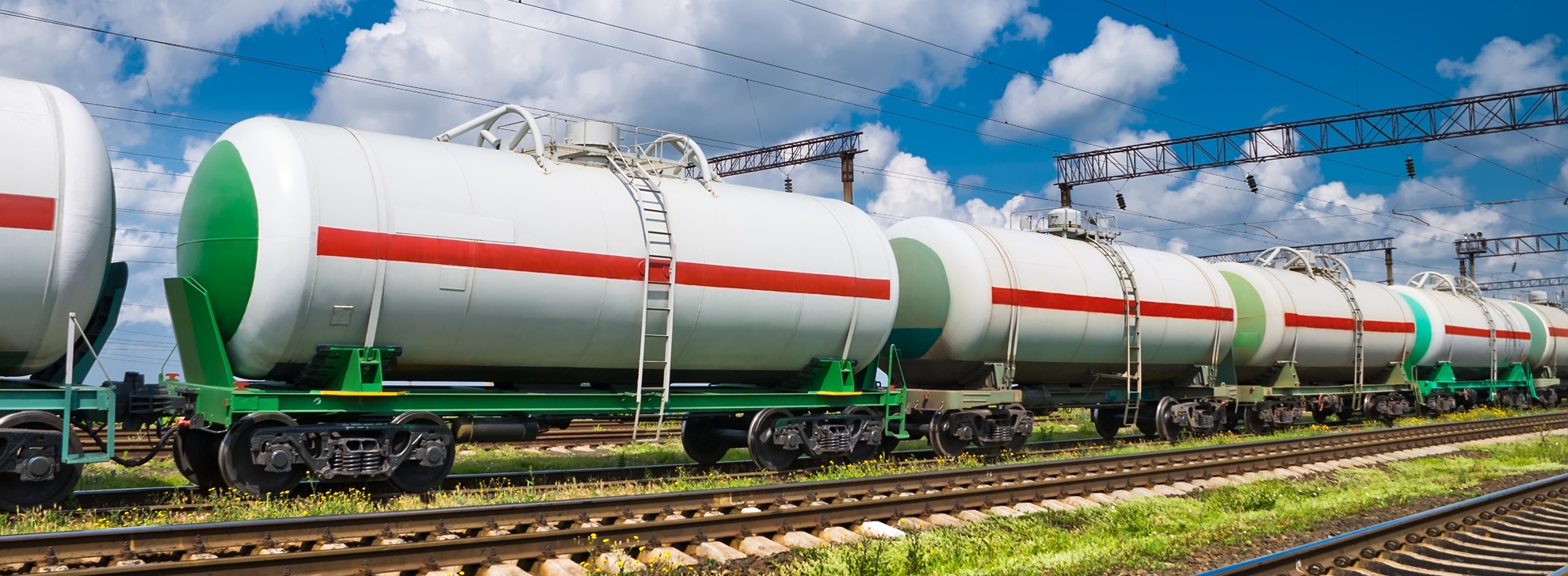
Challenge
DNV’s CCS Energy Transition Outlook, published in June 2025, highlights that carbon capture and storage (CCS) is at a pivotal moment, with global CCS deployment expected to grow substantially in the coming years. Efficiently linking capture sites to storage locations is becoming increasingly critical. Four transport modes are currently viable: pipelines and ships, more mature and widely deployed, and trains and trucks, which play a growing strategic role, especially in early-stage and regionally dispersed CCS projects.
Transporting CO2 by train can offer a promising means to accelerate CCS deployment, particularly in regions lacking pipeline infrastructure or facing long permitting timelines. Rail networks offer a flexible and scalable alternative, enabling captured CO2 to be moved efficiently from industrial sources to storage sites or utilization hubs. There are still important knowledge gaps in large-scale CO2 rail transport, especially concerning logistics, safety, and value-chain elements like loading facilities and buffer storage. Addressing these could unlock CCS potential for dispersed emitters with challenges accessing pipeline infrastructure, lowering upfront capital costs and accelerating deployment.
Solution
To enable the full potential of rail transport, the industry needs consistent technical guidance and a shared basis for design and operations. The CO2 on Track joint industry project is structured to close current knowledge gaps by addressing the following specific challenges that have been identified:
- How to effectively integrate transport by train into full CCUS value chains
- Key logistical considerations for transporting CO2 by train
- Technical and operational guidelines for implementation
- Safety and risk management for CO2 transport by rail
- Economic and environmental considerations
Leveraging its extensive experience with CO2 pipelines and shipping, DNV aims to develop a coherent set of guidelines supported by insights from participating partners, collating unique operational and technical perspectives. This collaboration will help define best practice that can credibly support future industry standardisation efforts, such as the development of international standards and regulation.
The proposed scope has been developed together with industry to ensure the work directly supports real project needs and accelerates the uptake of rail-based CO2 transport. All cases developed within the project will be based on typical scenarios agreed with industrial partners, making sure the work stays grounded in practical application and provides tangible benefit.
The scope outlined is not fixed and will be finalised with project partners. DNV will collect feedback from interested organisations to refine the proposal and project agreement. We aim to initiate the project during Q2 2026.
Work Package 1: Integration into the CCS value chain
Initial feedback suggests that participants considering CO2 transport by rail are unclear on how best to integrate it into CCS value chains. The following scope addresses such needs and provides the basis for subsequent work packages:
- Regulatory framework review:
- Provide a clear, neutral overview of the relevant regulatory environments
- Identify national interpretations in key jurisdictions
- Identify where regulatory complexity may affect project viability
- Value chain architecture:
- Define a typical train-based CCS transport chain
- State-of-the-art and gap analysis:
- Review state of the art technologies and operational experience
- Examine the technologies and operating practices
- Assess how these could be applied to CO2 rail transport
Work Package 2: Logistics
This activity focuses on the practical operation of CO2 trains in rail networks, providing a realistic understanding of operational considerations. It will define the key logistical parameters and feasible train configurations, including typical train length, number of wagons, loading and unloading rates, turnaround time, required track layout at terminals, and capacity needs such as siding length and buffer positions. The following activities will be addressed:
- Identify key logistical parameters and feasible train configurations
- Determine the appropriate number of railcars required for common scenarios
- Outline typical time and space requirements for loading/unloading
- Identify and summarise the high-level coordination needs with rail operators
- Evaluation of corridor specific capacity limitations
- Outlining the process for dynamic modelling of key CO2 rail logistics elements
Work Package 3: Technical and operational guidelines
Develop guidelines for design and selection of equipment, and for operation of rail-based CO2 systems. Particular focus will be placed on interface management. DNV will leverage in-house expertise in rail, CCS, material selection and technical safety, and draw on learnings from multiple completed and ongoing JIPs on CO2 transport by ship.
- Design basis and materials:
- Define recommended thermodynamic conditions
- Provide guidance on railcar material selection and insulation needs
- Cargo transfer and best practices:
- Review existing loading and unloading procedures used for dangerous goods in rail transport
- Outline system operation procedures
- Recommend suitable equipment options
- CO2 specification requirements:
- Evaluate the chemical composition requirements for CO2
- Outline the risks related to CO2 composition/presence of impurities
- Establish the overall specification envelope for both liquid and gas phase CO2
Work Package 4: Safety and risk management
This work package will develop clear, consistent safety and risk frameworks to help stakeholders understand and manage the risks associated with transporting CO2 by rail. Key activities include:
- Review existing maintenance and monitoring practices for pressure, temperature and leak detection on rail tank wagons
- Frame the basis for procedures and responsibilities for prolonged train stops
- Define venting procedures covering design, operational, and emergency scenarios
- Evaluate “safe areas”
- Create the basis for emergency response protocols for accidents or leaks:
- Identify a set of accident and leak scenarios based on potential release mechanisms
- Determine exclusion zones, safe approach distances, response constraints, and conditions
- Define the emergency response framework
Work Package 5: Economic and environmental assessment
Stakeholders note that decision-making is hampered by limited visibility on cost drivers and environmental impact. This work package will provide comparable economic and sustainability benchmarks to support evaluation of the project viability.
- Economic assessment
- Key economic drivers: Identification and mapping of primary cost drivers
- CAPEX and OPEX framework: Assessment of the CAPEX and OPEX associated with the principal components of the value chain (as defined in Work Package 1)
The economic analysis will integrate real-world cost data from existing wagon manufacturing programs where accessible.
- Environmental assessment
- Identification of key environmental impacts
- Detailed lifecycle assessment
Project details
Geographical location: Global
Kick-off expected date: Q2 2026
Expected duration: 12 months
To discuss participation in the CO2 on Track joint industry project, please contact Alessandro Bove.