Global battery energy storage system (BESS) trends and investment drivers across key regions
By Jason Goodhand, Global Segment Lead, Energy Storage, DNV

Battery energy storage systems (BESS) now sit at the heart of the global shift toward flexible, renewable‑dominated grids. Understanding the regional trends and investment dynamics driving this momentum is essential to supporting the next phase of the energy transition.
Solar plus storage: by the mid-2030s around 50% of new solar installations will be paired with storage
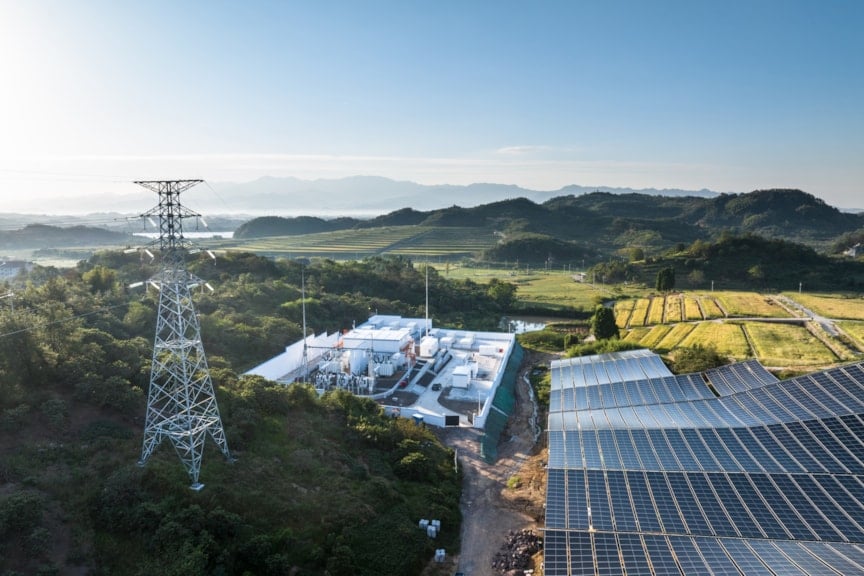
The global energy system is undergoing a crucial transformation, and few technologies illustrate this shift as clearly as the rapid rise of solar plus storage. In DNV’s Energy Transition Outlook 2025, electricity demand more than doubles over the coming decades as transport, buildings and parts of industry electrify. Meeting this growth increasingly depends on variable renewables, led by solar – and that changes what the power system needs. By the mid-2030s around half of all new solar installations worldwide will be paired with storage – a dramatic increase from today’s levels of around 6.6%. This shift is driven by fundamental system needs, maturing technology, and increasingly compelling economics.
From my perspective, working with DNV’s Energy Systems business area across global storage markets, and with monitoring firms like GreenPowerMonitor, a DNV company, the direction is clear: with solar the most dominant renewable and on track to become the most significant energy resource, BESS storage becomes essential to balance it. The combination is already influencing grid operations, investment strategies, and long-term planning across regions, reflecting the central role electricity now plays in the energy transition.
Battery cost declines, low-cost daytime energy and other factors driving storage acceleration
Solar is now among the cheapest sources of new electricity generation in many markets, particularly in regions with strong solar resources. But its value is constrained by its availability – it only generates during the day, often creating periods of surplus power. Storage solves this by shifting low-cost daytime energy into the evening, when demand and prices are higher. This fundamental dynamic will continue to drive pairing for decades.
Another major factor is interconnection. In many markets, grid connection queues are long and competitive. Developers increasingly add storage to existing solar sites to maximize the value of scarce interconnection capacity. As long as grid access remains constrained, this trend will persist.
Cost declines are also key. Both solar and storage benefit from scale: as manufacturing expands, costs fall. Storage, in particular, has been supported by the rapid growth of electric vehicles, which use similar lithium-ion cells. This has allowed the stationary storage sector to benefit from economies of scale it did not have to create on its own.
Despite these advances, storage remains a relatively young technology compared to solar or wind. Continued innovation from improved lithium-ion chemistries to emerging alternatives like sodium-ion will keep costs moving in a downward direction over the long term.
The financing challenge: finding stable revenue and financing models
As storage becomes more widespread, financing models must evolve. Lenders need confidence in predictable revenue streams, but storage often operates in merchant markets where price spreads can vary significantly from year to year.
This creates a challenge: how do you secure debt financing for an asset whose revenues depend on market volatility?
The sector is actively exploring solutions. Contracting structures and hedging strategies are emerging to provide a degree of revenue certainty. These systems help ensure that even in low spread years, projects can meet their debt obligations. Over time, we expect more standardized approaches to develop, similar to how power purchase agreements helped scale wind and solar.
Without storage, grids tend to rely on fossil fuel plants to fill the gaps
In DNV’s Energy Industry Insights survey, respondents identified BESS as a top enabler of energy security. This matches what we see on the ground.
As countries add more renewables, they must balance variability. Without sufficient storage, systems tend to depend on fossil fuel generation for flexibility, exposing them to fuel price volatility and geopolitical risk. Recent geopolitical tensions in the Middle East and disruptions to global gas markets have underlined the vulnerability of systems dependent on imported fuels, echoing lessons from the war in Ukraine earlier in the decade.
Storage, paired with local renewable generation, offers a different model. The cost of solar or wind is largely fixed at the time of installation, and storage provides the flexibility to use that energy when it is needed. This combination reduces exposure to external shocks and creates a more predictable, resilient energy system.
Cybersecurity considerations, the regulatory landscape and emerging standards
As storage becomes more integrated into critical infrastructure, cybersecurity is a growing concern. Battery systems are, at their core, electronic devices controlled by software and often connected to the cloud. This raises questions about the origin of control systems, data pathways, and potential vulnerabilities.
Organizations deploying storage, which may be behind the metre or at grid scale, must understand the regulatory landscape and emerging standards. Many buyers are already scrutinizing where control systems are manufactured and, in some cases, choosing energy management systems from third-party providers rather than relying solely on Original Equipment Manufacturer (OEM) solutions.
Cybersecurity standards will continue to evolve as the technology matures. Developers and operators should stay informed about upcoming regulations for the regions in which they operate and look to leading markets, such as the US, UK, or Australia, for early indicators of best practice.
At present, we are not seeing the same level of green or emissions‑focused policies that were prominent a few years ago, but that’s largely because so many other issues are taking priority at the moment. This feels like a temporary phase. Policy attention tends to swing back and forth, and I expect we’ll see renewed focus on reducing carbon emissions. When that happens, it will give another boost to renewables, BESS, and the broader energy transition. One trend, which was somewhat unexpected a few years ago, is that data centres are creating much higher load growth than we’ve seen in decades which will pick up and offset much of the temporary reduction in storage growth we might have seen due to green policy drivers.
Regional dynamics of storage: including Australia, China, and Chile
Asia Pacific
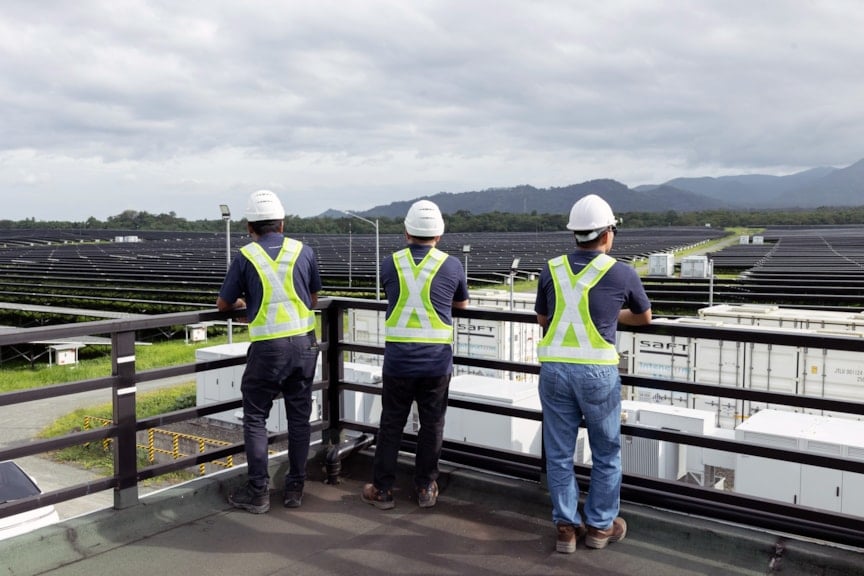
In DNV’s Energy Industry Insights survey, Asia Pacific respondents show strong appetite for energy storage investment, with 49% expecting to increase spending, slightly above the global average of 45%. China has been the dominant force, driven by consistent policy support, fast grid expansion, largescale renewable deployment, and a domestic battery manufacturing industry. India is emerging as another major market, with strong solar growth that also increasingly pulls storage with it.
Australia has also become a significant player, recently surpassing the UK as one of the largest storage markets. Its high solar penetration and flexible market design make storage a particularly valuable addition here. Some in the industry note that current grid code in Australia has made adding storage to solar and wind effectively a requirement.
Latin America
Chile offers one of the clearest examples of how market fundamentals can drive storage adoption without heavy subsidies. Chile’s renewable ambitions are among the most ambitious in Latin America. The national energy policy aims for 80% renewable electricity by 2030 and a fully decarbonized matrix by 2050. With extensive availability of low-cost solar and limited interconnection to neighbouring grids, Chile experiences predictable price spreads: low prices during the day and higher prices in the evening. This makes storage economically attractive, and the country has become an early mover in deploying longer duration systems of five to six hours without policy push.
Middle East and Africa
Renewable energy deployment is accelerating across the Middle East, driven by favourable natural conditions, available land, and strong access to capital. Compared with many other regions, projects often face fewer permitting constraints, allowing large-scale developments to move from planning to construction more quickly. Some of the world’s most ambitious solar plus storage projects are emerging here, including systems designed to deliver round-the-clock renewable power.
In Africa, storage plays a dual role: both by supporting low-cost solar deployment and strengthening grids that may lack the robustness of those in some other regions. The flexibility storage provides here can significantly improve system reliability.
Challenges in storage projects: including interconnection delays and equipment availability
Despite strong growth, several challenges can slow or prevent storage projects from moving forward.
- Interconnection delays remain a major bottleneck. Even when a project is economically sound, it cannot proceed without grid access.
- Revenue uncertainty can also discourage investment, particularly in merchant markets. Developers need to understand long‑term price trends and look at contracts that can help reduce that risk.
- Equipment availability – from batteries to transformers – can introduce delays, especially during periods of supply chain disruption.
As more storage comes online, people are paying closer attention to how it actually operates. Operators are learning how batteries age in real conditions, how to use them within warranty limits, and how to get more value from the systems they already have.
Looking ahead: storage will increasingly serve as a key balancing mechanism for renewable-dominated grids
DNV’s Energy Transition Outlook 2025 forecasts that solar and storage capacity will grow a hundredfold by 2049. This projection reflects both rising electricity demand and ongoing shifts in the relative competitiveness of different generation technologies. As energy systems evolve, changing economics for fossil fuels, alongside policy and decarbonization efforts in many regions, are reshaping the role of flexibility in power systems.
In this context, storage is expected to play an increasingly important role in balancing renewable-dominated grids, alongside other flexibility options such as demand response, interconnection, and flexible generation.
The long-term direction points to a power system in which storage will be essential to for supporting reliability, affordability, and the efficient integration of renewables.
Energy storage is no longer emerging and is fast becoming a core part of modern energy systems. Cost declines, system needs, and energy security concerns are driving fast growth worldwide. Challenges remain, especially around financing, interconnection, and cybersecurity, but the overall outlook is strong.
Working with DNV on BESS projects
DNV combines independent advisory expertise with advanced digital control and monitoring to help customers confidently invest in, build, and operate energy storage projects − reducing risk across the lifecycle while ensuring assets are safe, bankable, grid compliant, and optimized for long-term performance.
Explore practical insights in the latest guide, How to succeed in BESS projects, by GreenPowerMonitor, a DNV company.