Bladed 5: A modern platform for a changing wind industry

Modernising turbine simulation for the next decade
Since the 1990s, Bladed has been a cornerstone of wind turbine engineering. Across the globe, engineers have relied on Bladed 4 to deliver reliable load predictions for both onshore and offshore turbines. Bladed’s legacy is built on trust, technical depth, and a proven track record in the field.
As the industry scales and matures, increasing demands are placed on simulation tools:
- Turbines continue to get larger and more flexible, driving a greater focus on aeroelastic stability and the need for trusted simulation tools.
- Load calculations have scaled up dramatically. Design projects once required hundreds of simulations but can now be tens of thousands. Projects at this scale depend on robust automation.
- Modern onshore and offshore design requires close collaboration between experts and stakeholders across organisations.
Bladed 4 remains an excellent, trusted tool for established projects, certification, and proven simulation chains. Its graphical interface, offshore and floating capabilities continue to serve engineers worldwide. But as the industry evolves, so must the tools.
Why Bladed 5, why now?
Bladed 5 is built specifically for this new reality, delivering a modern, flexible and automatable platform for industrial wind turbine simulation.
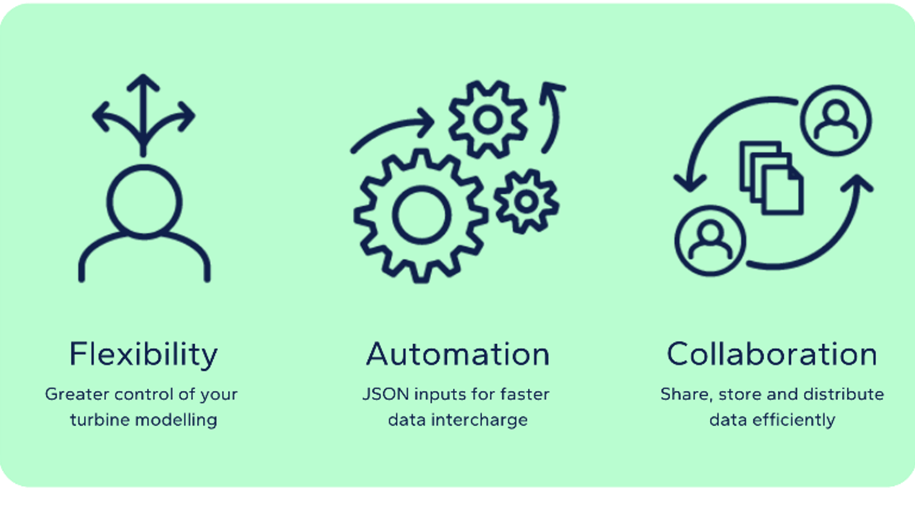
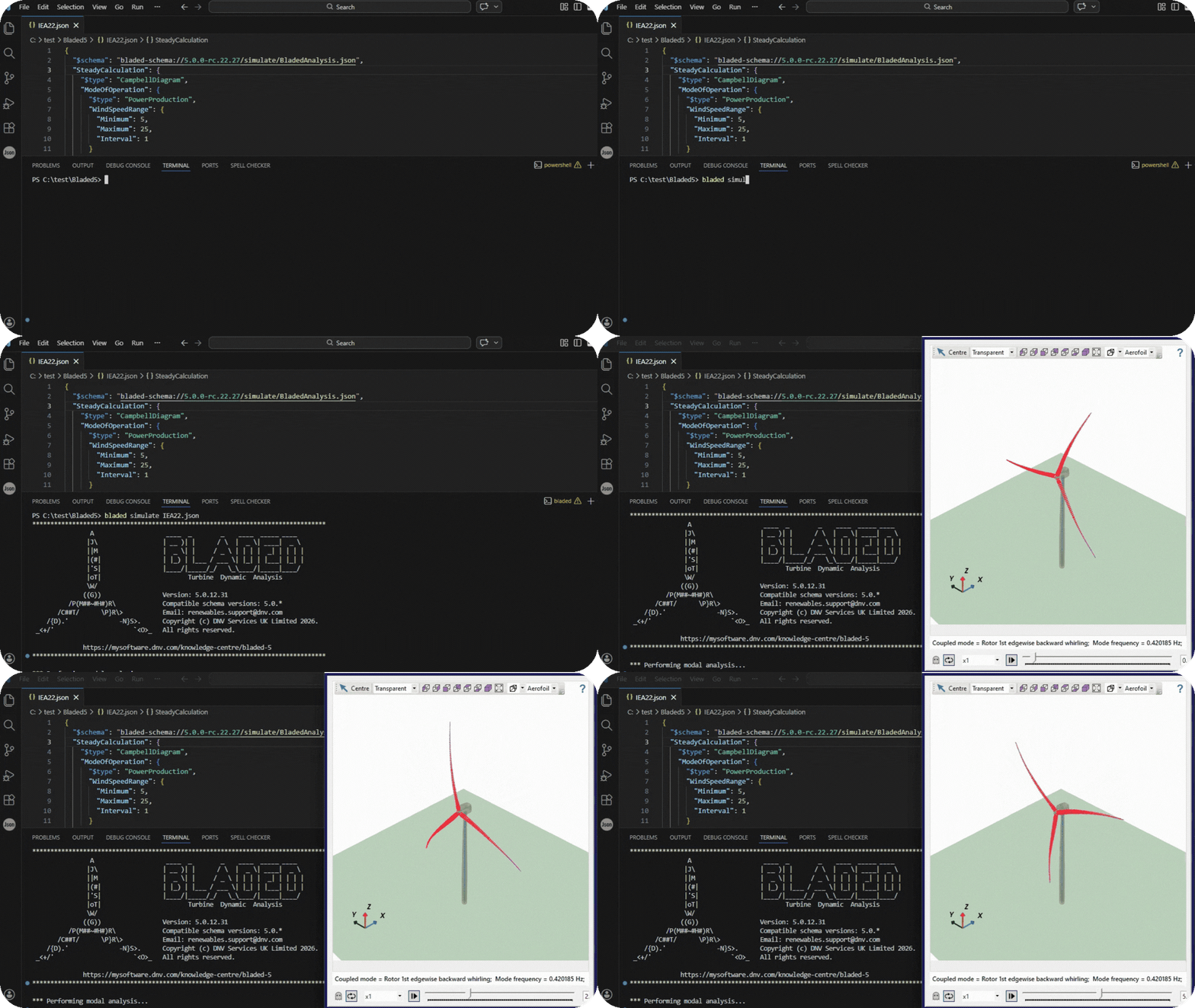
Bladed 5 introduces a JSON-based data model with schema validation. This well-defined input model enables robust automation, a clear presentation of modelling options, as well as AI-driven processes.
Modern API interfaces enable efficient automation of the entire process from simulation setup to results post-processing, allowing Bladed to integrate seamlessly into industrial toolchains, and calculation volume to scale up as required.
New engineering value is unlocked in Bladed 5 thanks to a more flexible calculation engine. For the first time, Bladed users gain direct control of the multibody dynamics modelling, allowing exploration of novel modular concepts and architectures.
Turbine input data for sub-components can be defined in separate JSON files, enabling different teams to own and validate their sub-models against the schema. This enables different specialist times to collaborate more effectively.
A simpler entitlement system will allow any user to get full unrestricted access to all the features in the software, managing workload at their convenience.
Built with the industry, for the industry
Bladed 5 has been shaped by extensive input from the global turbine engineering community. Over 200 Bladed users, representing 44 companies, participated in feedback activities, workshops, and testing sessions throughout the development process. This collaborative approach ensures Bladed 5 addresses real-world challenges and is ready for the workflows engineers need today and tomorrow.
Two generations, one lineage
Together, Bladed 4 and Bladed 5 provide a complete ecosystem for turbine engineering, supporting today’s projects and enabling tomorrow's innovations.
Bladed 5 is the next step in the evolution of turbine engineering software. It builds on the heritage of Bladed, shaped by decades of engineering trust and global collaboration. It is now released for onshore workflows, while the Bladed development teams work diligently to implement the full offshore workflows.
Author: Will Collier & Diogo Cerqueira
