EHS audit management software: A complete guide to audit workflows, tracking and reporting

An EHS audit is a formal, systematic and objective examination of an organization’s safety processes and procedures.

The purpose of an EHS audit is to determine whether those processes meet internal standards, regulatory requirements and wider business goals. Most importantly, it identifies weaknesses in the safety management system before they result in injuries, fatalities or equipment damage. 

EHS audits are most effective when they are linked to incident insights. Effective EHS audit management ensures that the process is structured, traceable and aligned with operational risk. 

Rather than relying on spreadsheets and email chains, organizations are increasingly using EHS audit software to control the entire audit lifecycle. This way they gain transparency, accountability and measurable improvement.

Why EHS audits matter beyond compliance

Although regulatory compliance is a key driver, a modern EHS audit does more. When managed correctly, audits become a strategic tool for strengthening safety performance. 

A well-designed audit programme helps:

  • verify that safety controls and procedures are functioning as intended 
  • identify operational risks, hazards and unsafe behaviours at an early stage 
  • reinforce a proactive safety culture built on engagement and accountability 
  • prevent incidents by highlighting equipment issues, process gaps and resource constraints

EHS audit best practices focus on real operational outcomes. Audits provide a snapshot of the maturity of safety controls, while incidents reveal where those controls have failed in practice. When the two are connected, organizations create a continuous improvement loop rather than a simple compliance checklist.

EHS audit lifecycle and Synergi Life

When incident management and audit programs live in separate systems, it is difficult to gain a holistic view of organizational safety. Data silos mean that reactive learning from accidents is kept separate from proactive verification of controls.

audit management software user

Synergi Life software from DNV overcomes this by providing a unified, closed-loop EHS ecosystem that connects these functions into a single workflow. This integration enables a continuous improvement cycle, where insights from incidents directly inform audit criteria and corrective actions.

How the continuous improvement cycle in Synergi Life works

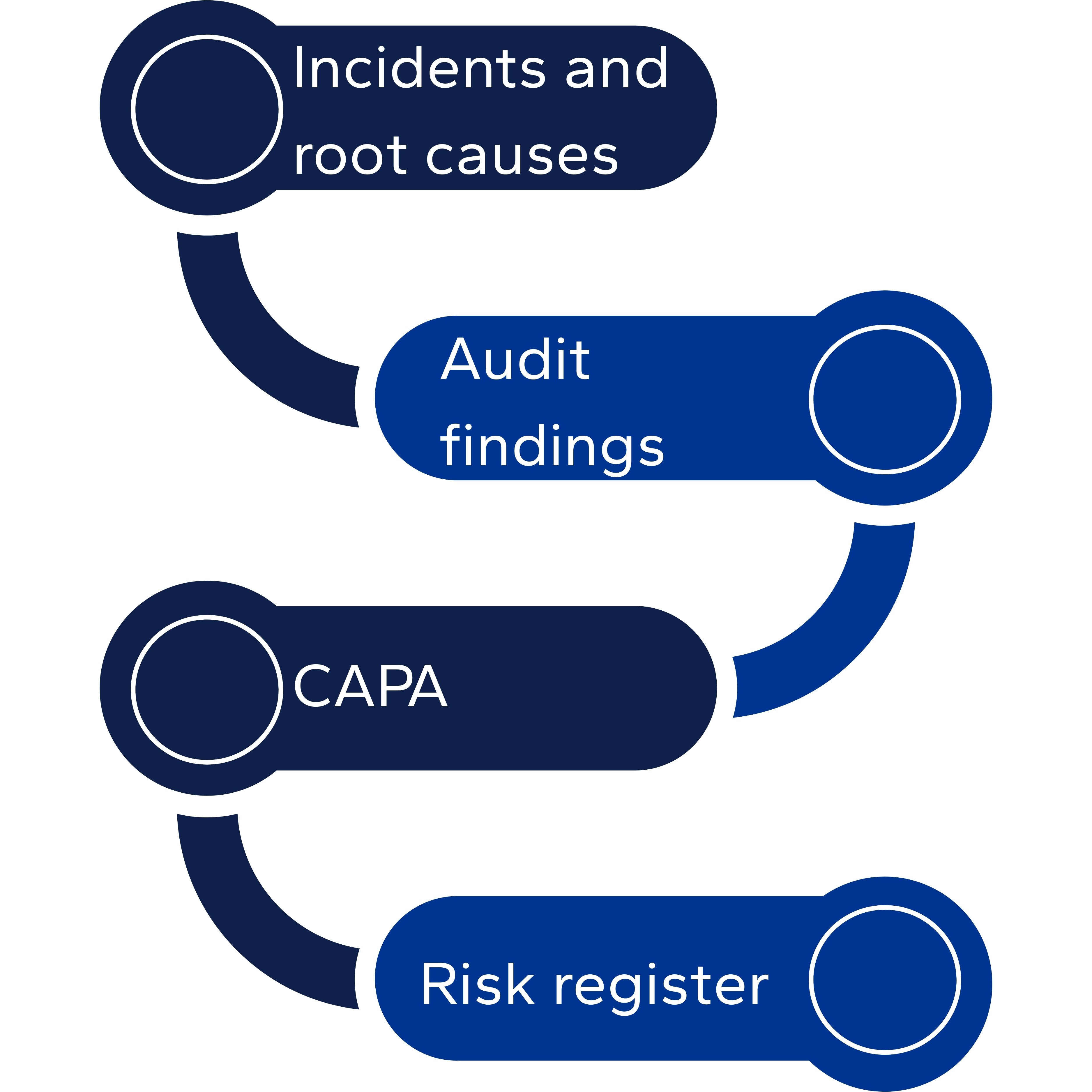
Continuous improvement cycle

Incidents and root causes: The cycle begins when an incident or near-miss is reported, prompting an investigation to identify the underlying root causes of why a safety barrier failed.

Audit findings: These root causes directly inform future audit criteria and findings, ensuring that auditors are proactively checking the specific controls that have previously broken down.

CAPA: Non-conformities found during an audit or incident investigation are entered into a shared corrective and preventive action (CAPA) process. This ensures that safety-critical tasks are tracked, assigned and verified within one central system. 

Risk register: Insights feed back into the organization’s risk register. By linking audit results and incident data to risk controls, Synergi Life enables a holistic approach to governance, allowing teams to mitigate threats before they escalate into new incidents.

By unifying this chain (Incidents → Root causes → Audit findings → CAPA → Risk register) Synergi Life ensures that lessons learned from past failures are used to strengthen future preventive measures.

How integrated audit and incident management improve EHS performance

Integrating audit and incident management transforms safety from a reactive function into a proactive driver of operational excellence. Integration allows safety leaders to analyse data across modules, recognize trends and uncover areas of risk that might otherwise remain hidden. Centralized dashboards make it possible to identify recurring equipment failures or human errors across multiple sites, enabling preventative measures to be implemented more consistently.

Strengthening risk-based auditing

A unified approach supports risk-based thinking in alignment with standards such as ISO 31000. Instead of performing generic inspections, organizations can focus auditing on the highest-risk areas identified by recent incident data. This ensures that audit criteria remain dynamic and directly linked to critical risk controls and safety barriers. 

One of the greatest challenges in EHS is ensuring that a fix actually works. Integration allows organizations to validate whether corrective and preventive actions (CAPA) have been effective over time. For example, if an incident leads to a new safety protocol, the next scheduled audit can verify that the protocol is being followed and is achieving the intended results. 

Enhancing visibility and decision-making

Unified software provides leadership with a single source of truth. Dashboards consolidate data from across the organization, providing visibility into KPIs such as lost time injury (LTI) and total recordable injury (TRI) alongside audit completion rates. This transparency supports informed decisions regarding safety priorities and resource allocation. 

Managing the EHS audit lifecycle in practice

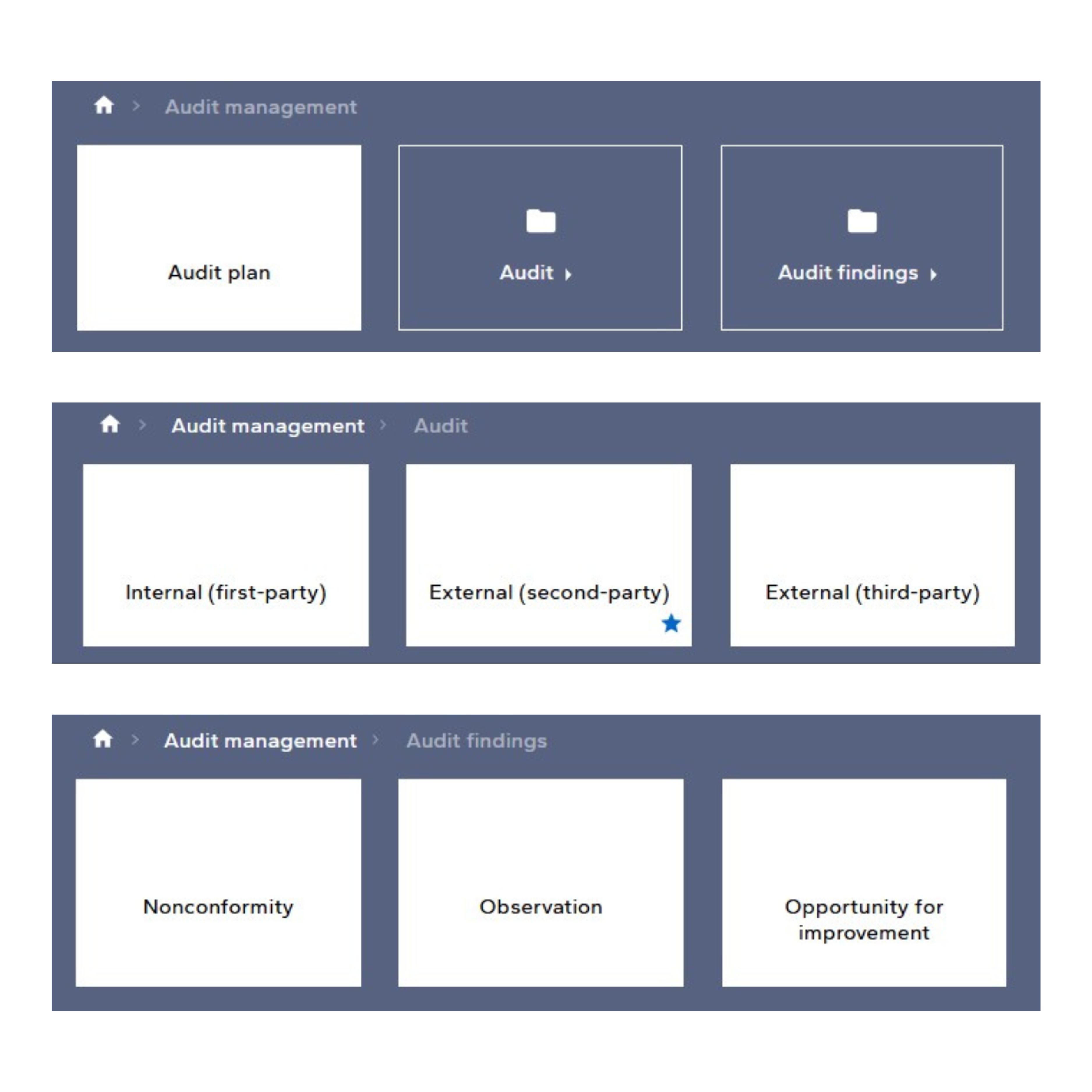
Audit structure with Synergi Life My Audits
Audit structure with Synergi Life

Using the EHS audit management tools in Synergi Life, safety leaders can schedule audits based on risk level, regulatory demands or internal frequency requirements. Digital planning tools ensure visibility across sites and prevent overlaps or missed inspections.

Consistency is critical across locations and departments. Synergi Life allows organizations to create configurable checklists tailored to operational needs or aligned with standards. The modern audit workflow in the software enables auditors to conduct inspections directly on mobile devices, even offline. Evidence capture allows photos, documents and comments to be attached to the audit record in real time. 

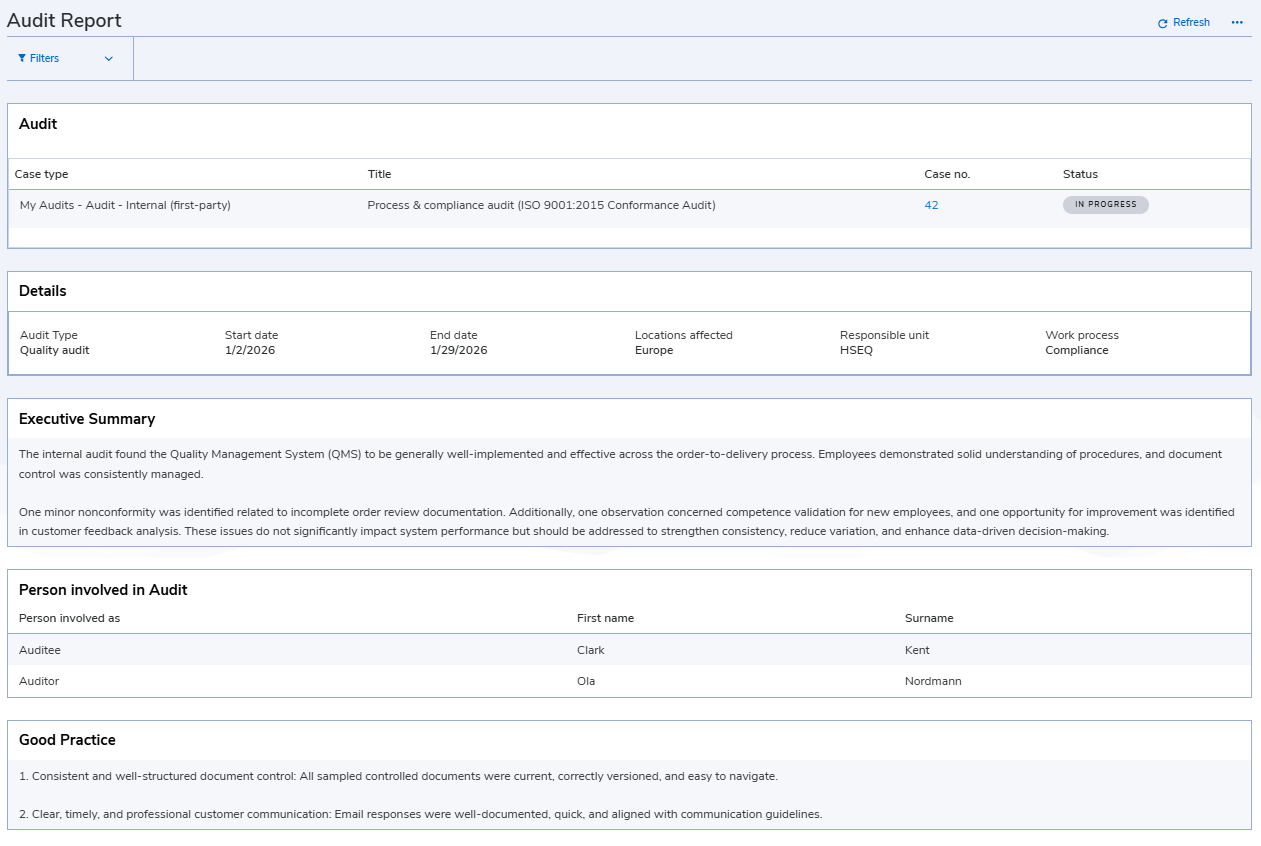
Audit report with Synergi Life

During execution, non-conformities and improvement opportunities are recorded in real time. Audit tracking software links each finding to the relevant checklist item, ensuring traceability and structured audit tracking. 

A robust EHS audit process must trigger corrective and preventive actions. Synergi Life’s integrated audit reporting software allows organizations to assign responsibilities, set deadlines and monitor progress until findings are verified and formally closed. 

The final stage of the EHS audit lifecycle is reporting and analysis. Built-in audit reporting software generates comprehensive reports and management summaries, while dashboards highlight trends and high-risk areas.

Advancing safety performance through digital audit management 

Digital EHS audit management is a strategic driver of operational excellence. By replacing fragmented tools with integrated audit workflow software and audit tracking software, organizations reduce manual effort, minimize human error and improve regulatory compliance. 

When the EHS audit process is aligned with incident insights and supported by robust audit reporting software, every finding becomes an opportunity to strengthen controls and reduce risk.  

A unified, digital approach transforms audits from periodic inspections into an ongoing mechanism for learning, accountability and performance improvement.

Synergi Life users and colleagues talk in DNV office

Discover how Synergi Life can support your organization

Synergi Life, DNV’s EHS and quality, risk management and ESG software, empowers organizations to proactively identify and mitigate risks, comply with regulations, and improve their operations.