A complete guide to permit to work (PTW) systems

A modern permit to work (PTW) system provides a structured documented process that helps organizations identify risks, implement controls and authorize work safely and efficiently.

Ensuring safe execution of work in hazardous or non-routine environments is essential for preventing workplace incidents and maintaining operational integrity.  

DNV’s Synergi Life Permit to Work software module delivers end-to-end digital safety management combining a fully integrated electronic work permit solution with smart risk analysis, seamless collaboration tools and centralized dashboards for continuous monitoring and improvement. 
What is a permit to work system?

A permit to work (PTW) system is a safety authorization required when high-risk or non-standard work activities are planned. It confirms that all foreseeable hazards have been identified, appropriate risk controls have been defined and approved and that responsible personnel are aware of the work before it begins. 

A PTW system forms a critical part of an organization’s wider safety management system and is used for non-standard work activities where uncontrolled hazards may lead to injury, environmental harm or operational disruption. 

Key components of a permit to work document

permit request
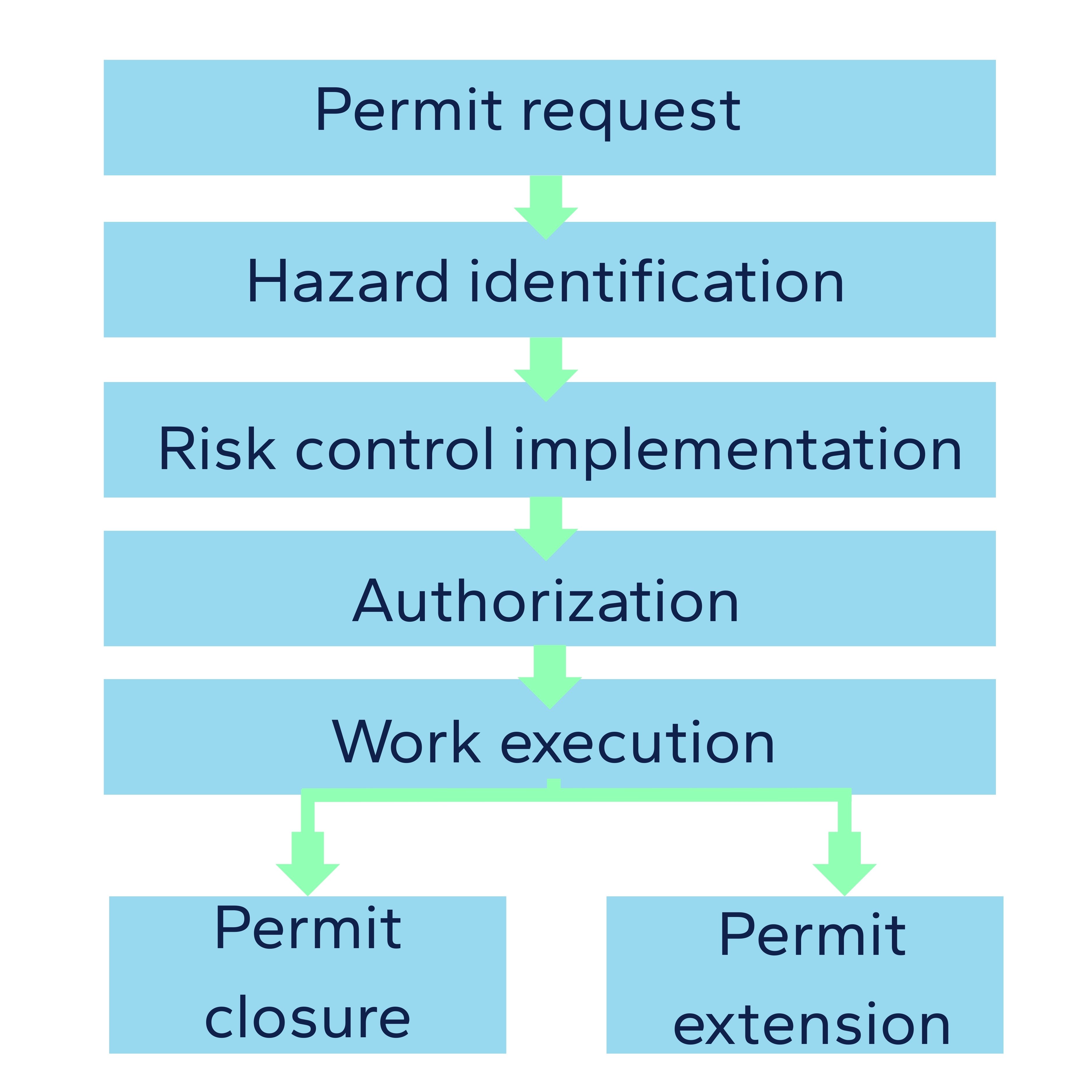
PTW system workflow

A standard PTW form typically addresses: scope and description of work, hazard identification and risk assessment, required safety control measures including isolation procedures, competency and role assignments, environmental and emergency considerations, permit validity and rules for handover, suspension, extension and closure. 

The roles involved normally include the permit issuer, permit holder or performer and the work supervisor. These roles share responsibility for verifying that safety conditions are met before the work starts and that they are maintained throughout. 

Why is a PTW system important?

A PTW system plays a vital role in occupational safety, process safety management and regulatory compliance. It ensures hazards are systematically identified, communicated and controlled using appropriate engineering, procedural or administrative measures. It also improves operational clarity, helping to prevent conflicting work activities, unsafe conditions or unexpected releases. 

Compliance with recognized standards and safety regulations such as OSHA requirements or ISO 45001 becomes easier through traceable documentation and structured workflows. A reliable PTW approach also supports operational efficiency by reducing manual paperwork, minimizing confusion and supporting more consistent approvals. 

Types of permit to work systems

Common PTW categories include hot work, confined space entry, electrical work, excavation, lifting and rigging, work at height and breaking containment or isolation of pressurized systems.  

Synergi Life’s PTW module supports configurable templates that can be tailored to specific operations or industries. Each permit type can be linked to customized workflows, checklists and authorization paths, enabling precise alignment between operational context and safety controls.

How permit to work systems operate

The PTW process generally includes submitting and defining a permit request, identifying hazards and confirming that necessary safety controls such as isolations and protective equipment are in place, followed by formal authorization before work begins. The permit remains active while the job is in progress and work must be carried out in accordance with specified safety measures under appropriate supervision. When the task is complete, the permit is formally closed through a documented handover and verification process. If conditions change, the permit may require suspension, amendment or extension. 

PTW systems are most effective when fully integrated with supporting safety tools such as job safety analysis (JSA), lockout/tagout (LOTO), digital risk assessments and emergency preparedness plans. Digital workflows, real-time tracking and clear responsibility allocation help maintain control, visibility and safety from initiation to closure. 

Synergi Life’s Permit to Work software module

control safety risks
Control safety risks with Synergi Life

DNV’s Synergi Life Permit to Work solution upgrades traditional manual processes into a fully digital connected and analytics-driven system. Its capabilities are designed to support workplace safety, regulatory compliance and continuous improvement across high-risk sectors including energy, oil and gas, chemical processing, maritime, manufacturing and utilities. 

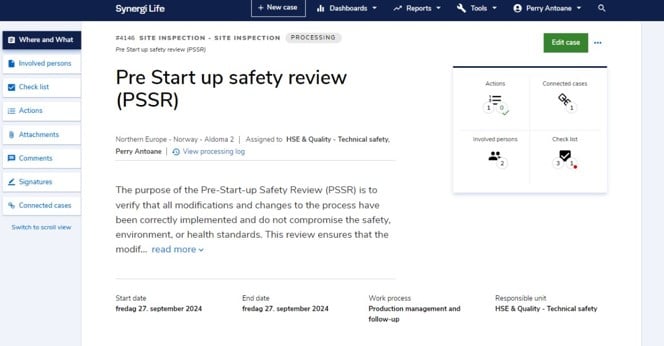
Implement a feasible Pre Start up Safety Review with Synergi Life
Implement a feasible Pre Start up Safety Review with Synergi Life 

Key features include: fully electronic permit creation, approval, tracking and archiving; structured risk and hazard assessment workflows; role-based permissions and audit-ready data trails; real-time access via desktop, tablet and mobile; integration with JSA, risk assessment, isolation/LOTO and emergency response modules; and centralized dashboards for monitoring, reporting and decision-making. The Synergi Life solution is scalable, customizable and capable of supporting both simple and complex operational environments. 

Permit to work and safety culture

A PTW system is not just procedural documentation; it is a behavioural and cultural mechanism that promotes accountability and risk awareness. When consistently applied, PTW supports clear communication between teams, encourages proactive hazard identification and reinforces the principle that safe execution takes precedence over speed or convenience. A mature PTW approach contributes significantly to a strong, resilient and learning-oriented safety culture. 

Conclusion

A permit to work system is a key mechanism for protecting people, assets and operations in high-risk sectors and forms a central pillar of effective safety management. When supported by digital tools such as DNV's Synergi Life Permit to Work software module, organizations can strengthen compliance, reduce risk, streamline communication and improve safety performance through reliable, auditable and connected workflows.

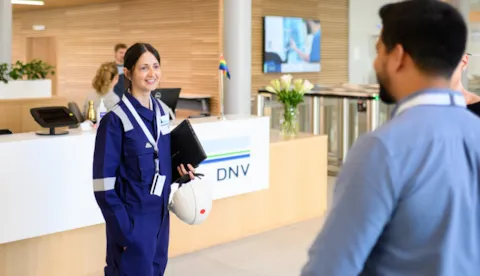
Synergi Life users and colleagues talk in DNV office

Discover how Synergi Life can support your organization

Synergi Life, DNV’s EHS and quality, risk management and ESG software, empowers organizations to proactively identify and mitigate risks, comply with regulations, and improve their operations.