Technical root cause analysis
Bringing clarity to technical complexities
Identify and troubleshoot technical failures, determine root causes, and gain clear recommendations – enabling informed decisions, reduced risk and a safe return to operations.
Journey continues on Veracity, DNV's trusted digital platform.
Technical root cause analysis
When failures occur, it is not always clear what caused the issue, what action is needed, or how to prevent recurrence. The complex interactions between structures, materials, and systems, such as rotating machinery, propulsion and control systems, mean the root causes are often not readily apparent.
In many cases, time pressures, limited resources, fragmented information, and differing perspectives add further complexity.
Without a well-structured approach, this can lead to delays, uncertainty, recurrence and unnecessary costs.
DNV’s technical root cause analysis (RCA) service provides an independent, evidence-based view of what happened and why.
By combining multidisciplinary expertise with advanced measurement and analysis techniques, like vibration analysis, material assessment, mechanical or hydrodynamic evaluations, we support you in making informed decisions, managing failures, and returning to operation with confidence.
Key benefits of technical root cause analysis

Get the right expertise, when and where it is needed
- Access to a global, multidisciplinary network of experts across mechanical, structural, and systems engineering
- Support across maritime, offshore, energy applications and other related industries
Gain clarity and alignment across stakeholders
- Build a shared, fact-based understanding of what happened and why
- Rely on a structured, evidence-based RCA methodology
- Alignment between internal teams and external parties

In-house materials laboratory
- DNV lab can conduct metallurgic analysis of damaged components, such as crankshafts, cams, valves, gear teeth, bearings and more
- Material findings feed directly into the RCA and proposals for long-term solutions
Achieve cost and risk-conscious outcomes
- Transparent and verifiable findings
- Avoid unnecessary repairs, delays or disputes
- Improve safety, reduce risk, and prevent recurrence
FAQs
-
The service supports anyone involved in technical incidents of machinery and systems, including operators, technical teams, equipment manufacturers, insurers, yards and the responsible management.
-
Maritime, offshore oil and gas, rail, process and heavy industries of all types.
-
The service covers failures across a wide range of systems and components including:
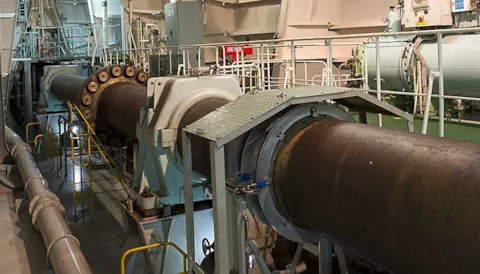
- Rotating machinery and propulsion systems (e.g. combustion engines, turbo machinery, shafts, couplings, gear transmissions, bearings, stern tubes, propellers, electric motors, generators and pumps)
- Batteries
- Fuel cells
- Hybrid systems
- Control and system engineering
- Material technology
-
The analysis is supported by a broad range of in-house expertise including:
- Fracture mechanics
- Fatigue and strength analysis by Finite Element (FEA)
- Shaft rotor dynamics, shaft vibration analysis (torsional vibration calculation, axial/lateral vibration calculation, and axial vibration calculation) by FEA or Nauticus Machinery calculation tools
- Shaft alignment and bearing load analysis by Nauticus Machinery calculation tools
- Material technology
- Electrical and control systems
- Hydrodynamic modelling using Computational Fluid Dynamics (CFD)
-
Various kinds of in-situ measurements can be performed as part of RCA and verification work, including:
- Power and speed measurements
- Bollard-pull measurements
- Shaft vibration measurements (torsional vibrations, bending moments, and lateral/whirling vibrations) using strain gauges and telemetry, proximity probes etc.
- Control system stability and performance assessments
- Bearing load measurements (jacking, loadcell, LVDT etc.)
- Thermography
- Flow measurements of fuel, cooling, or lube oil
Related resources

Benefit cases
Explore real cases of technical failures – highlighting challenges, solutions and impacts.
Contact us