
Common Information Model
Future-proof your utility with DNV's expert CIM-services, accredited by ENTSO-E
Journey continues on Veracity, DNV's trusted digital platform.
Common Information Model
What is the Common Information Model (CIM)?
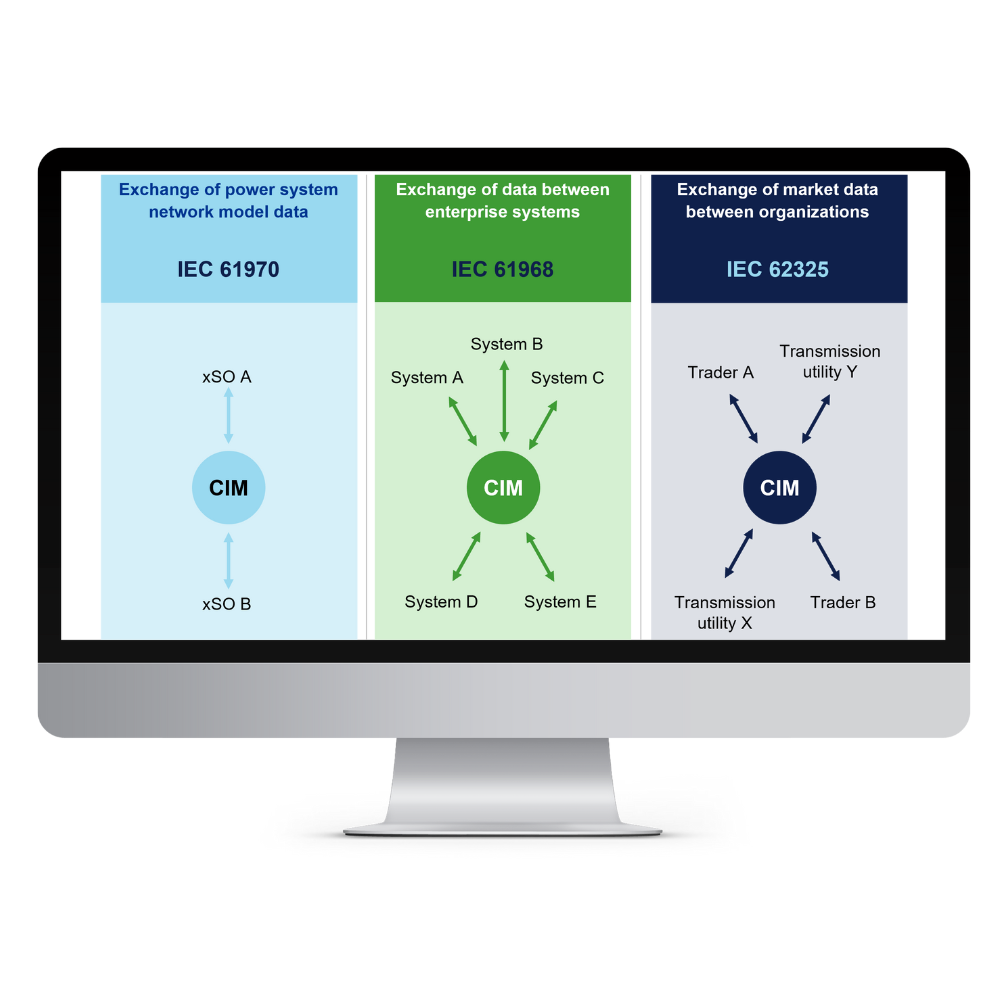
The Common Information Model (CIM) is a global standard for structuring and exchanging utility data. CIM provides a unified way to model assets, operations, and processes, making it easier for different systems and organizations to communicate and integrate.
Why CIM matters for utilities and power grids?
The Common Information Model (CIM) standardizes how utilities manage and exchange grid data. By aligning with International Electrotechnical Commission (IEC) standards, utilities improve interoperability, reduce vendor lock-in, and prepare for CGMES 3.0 compliance.
Key benefits:
- Enables interoperability between diverse systems and vendors
- Simplifies integration and grid data exchange
- Reduces maintenance costs and complexity
- Supports long-term scalability and innovation
Why choose DNV for CIM compliance and modeling services?
DNV combines decades of energy expertise with a leading role in developing CIM standards, including the International Electrotechnical Commission Technical Committee 57 (IEC TC57), the European Network of Transmission System Operators for Electricity (ENTSO-E), the Common Information Model User Group (CIMug), and the International Council on Large Electric Systems (Conseil International des Grands Réseaux Électriques, (CIGRE).
DNV supports the full spectrum of CIM adoption - from advisory and roadmap planning to CIM conformance testing, CGMES 3.0 validation, and automated rule generation with CIMbion. Trusted by leading Transmission System Operators (TSOs), Distribution System Operators (DSOs), and software vendors worldwide, we deliver expert guidance and innovative tools that make grid data future-ready, interoperable, and fully compliant.
Comprehensive solutions for every stage of your CIM journey
DNV’s CIM services support utilities, grid operators, and vendors at every stage of Common Information Model adoption. From expert advisory and system transformation to conformance testing and training, we help you achieve seamless interoperability and regulatory compliance.
-
CIM conformance testing and CGMES 3.0 validation
CIM conformance testing by an independent third party like DNV improves interoperability across grid systems by verifying that data exchange implementations conform to the Common Information Model (CIM) standard.
DNV is an ENTSO-E-accredited test laboratory authorized to perform CGMES v3.0 conformance testing, helping utilities, vendors, and system operators validate their data models and ensure seamless integration with other systems.
What we offer:
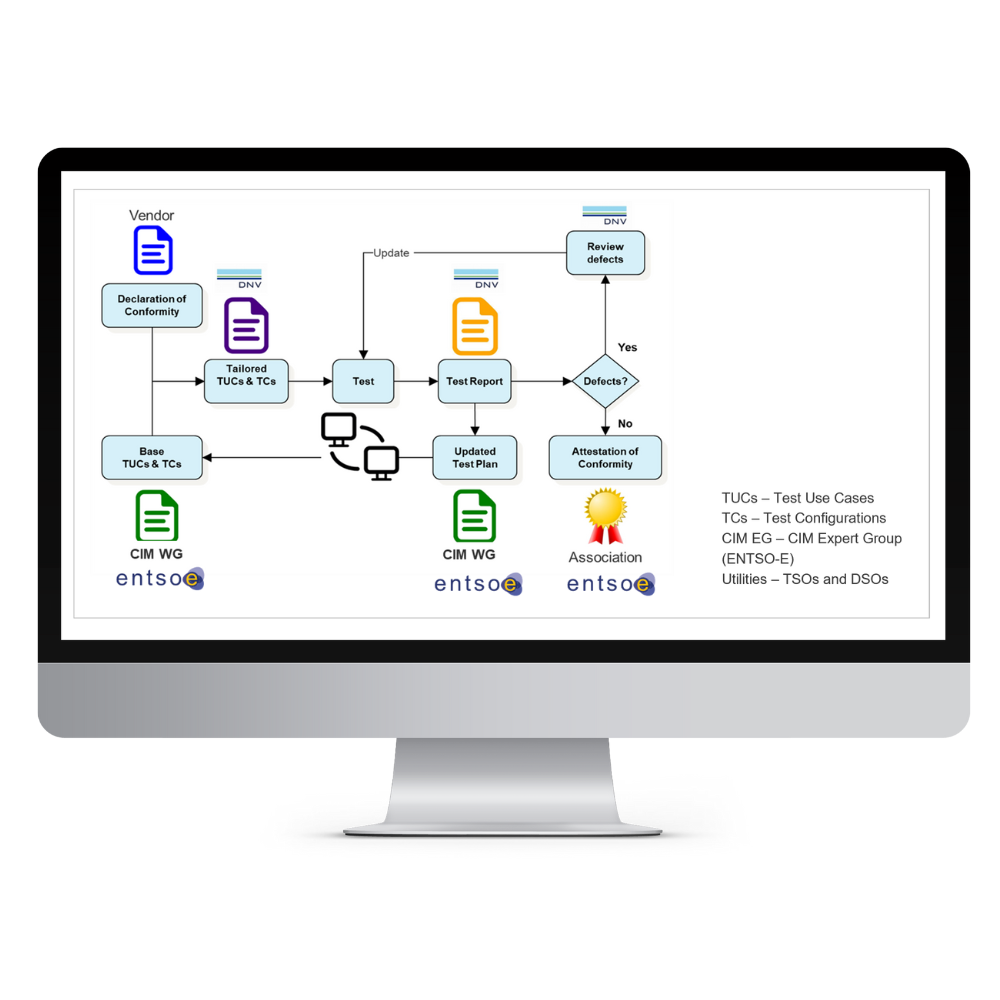
- Testing services based on tailored test use cases (TUCs) and test configurations (TCs)
- Transparent defect review and update process
- Issuance of official Attestation of Conformity after successful testing
- Full support through DNV's proprietary testing tool, CIMbion.
Why it matters
Interoperability issues can delay deployments and increase vendor lock-in risks. Our independent conformance testing ensures your systems meet the required standards from day one.
-
What is CIM advisory?
CIM Advisory helps power sector stakeholders adopt the Common Information Model (CIM)—a standardized data model that ensures interoperability between grid systems. DNVs expert guidance supports utilities, grid operators, and vendors in transforming legacy systems, aligning data strategies, and validating models to achieve CIM compliance and enable efficient, future-ready operations.
DNV CIMification - your end-to-end CIM transformation
DNV CIMification is a holistic approach to helping organizations transform their existing systems to meet Common Information Model (CIM) standards. From business processes to technical validation, DNV supports the entire journey—ensuring data quality, interoperability, and long-term scalability through industry-recognized expertise and active involvement in International Electrotechnical Commission (IEC) TC57.
- CIM in business process development
Integrate CIM into your business operations to streamline workflows and enhance collaboration. - CIM roadmap and tender support
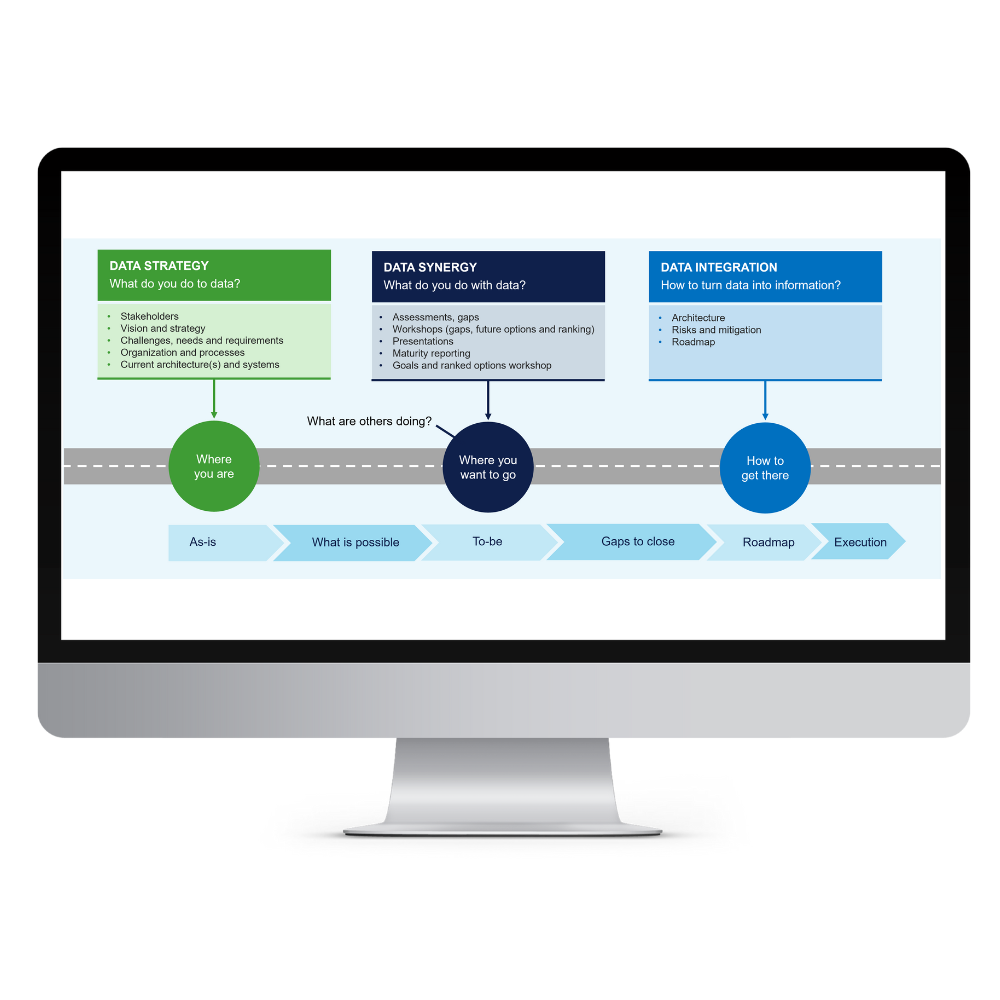
We guide you in planning your CIM adoption with tailored roadmaps, tender documentation, risk analysis, and stakeholder alignment. Our consultants help optimize data strategies and integration pathways for long-term success. - Data management strategy and model governance
Strengthen your data governance framework with our model validation reports, performance monitoring metrics, and stakeholder communication plans. We support you in building scalable, transparent data management strategies rooted in CIM standards. - Verification and validation
Ensure your systems meet CIM conformance with our independent verification and validation services. Leveraging tools like CIMbion, we conduct automated testing across CGMES, GB CIM, Network Codes, and custom CIM profiles—boosting interoperability and reducing vendor lock-in. - Digital twin CIM/BIM harmonization
We explore the convergence of CIM and Building Information Modeling (BIM) to create rich digital twins of grid infrastructure. This integration enables multidimensional data analysis and decision-making by bridging physical and digital domains. - Asset data management and object type libraries
Our methodologies support consistent, accurate asset data across systems using object type libraries (OTLs). We provide training, documentation, automated validation, and data governance practices to ensure your asset data remains reliable and accessible over time.
- CIM in business process development
-
CIM training programs
Accelerate the digital transformation of your organization with our expert-led CIM training programs, tailored for energy professionals. From foundational courses to advanced profiling and validation, our modules are designed to help you implement and optimize CIM standards across operations, asset management, and energy markets.
Value: Understanding of IEC CIM standards can support digitalization in operations, planning, asset management and energy markets.
Popular courses:
- Basic training – power of CIM
- Dedicated CIM workshops
- CIM use-case development
- CIM modelling concepts
- Advanced CIM extensions and profiling
- SHACL and validation techniques
- CIM tools and validation methods
Tools that enable Common Information Model (CIM) success
Real-world applications of model-driven grid operations
Discover how CIMbion enables grid operators to transform data complexity into actionable strategy—driving interoperability, security, and future-proofed grid operations.
Whether you're defining your data strategy or preparing for full CIM integration, our tools and frameworks help you manage expectations, align stakeholders, and ensure scalable success.
Access the CIM and CIMbion use case guide here.
-
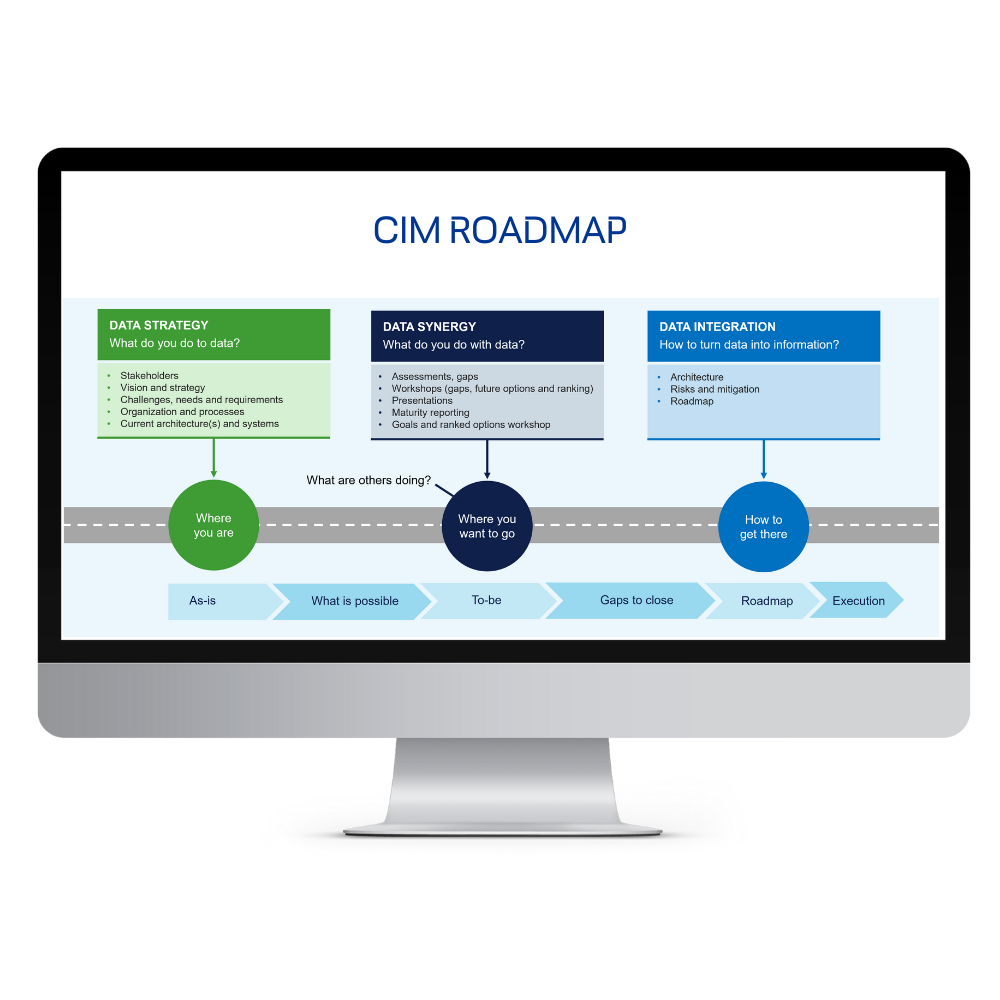
CIM roadmap - the steps needed to manage expectations and risks
Challenge: a leading transmission system operator (TSO) needed to streamline their data architecture, align internal stakeholders, and establish a unified data strategy for CIM compliance.
Solution: using CIMbion tool, they assessed their current architecture, identified gaps, and mapped out critical business processes. This formed the basis of a clear, standards-aligned CIM roadmap.
Focus area: stakeholder alignment, architecture review, CIM readiness
Value delivered: clear data view, strategic roadmap foundation, future integration.
-
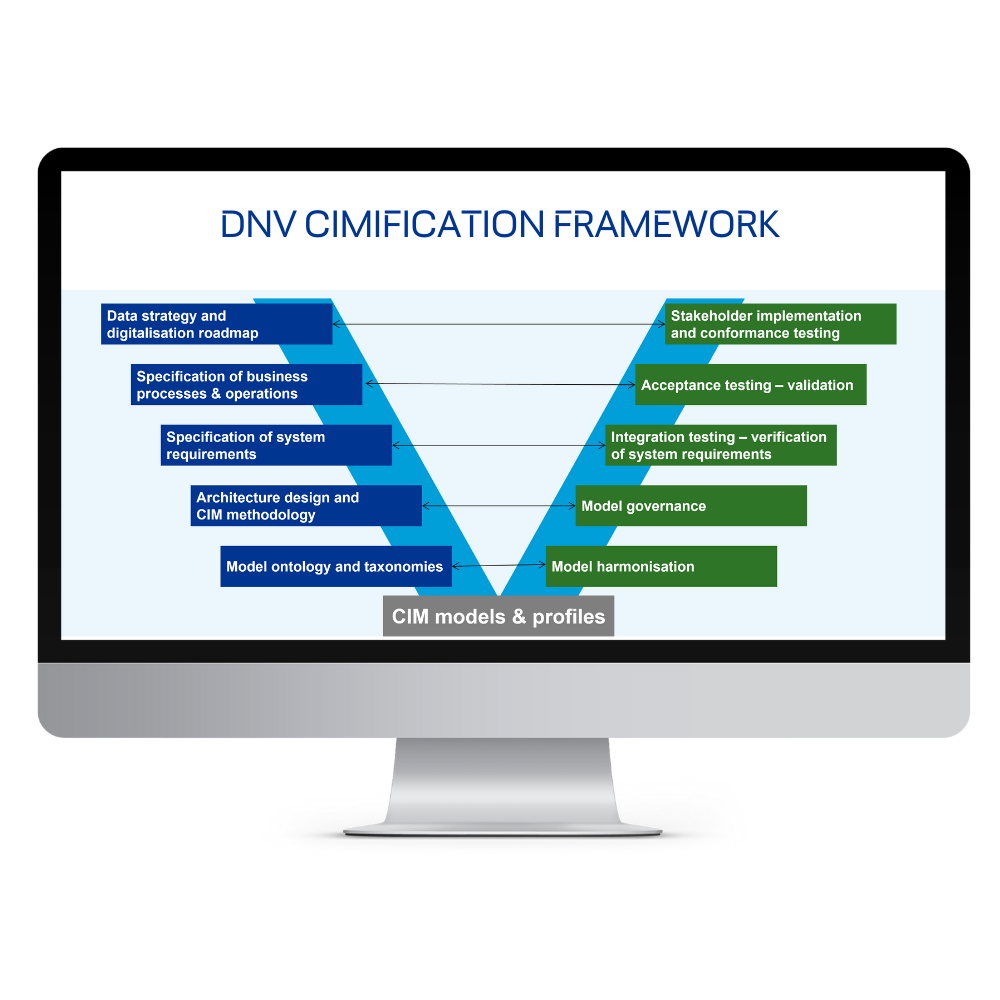
DNV CIMification framework - crucial for successful large-scale system replacement projects
Challenge: a major major distribution system operator (DSO) faced significant complexity during a large-scale system replacement. They needed to align their data strategy with a modern technical architecture while reducing risks tied to model inconsistencies and siloed governance.
Solution: by adopting DNV CIMification framework, they implemented CIM standards across the entire lifecycle—from requirements and system specification to architecture design, validation, and integration testing. The framework helped streamline model governance and harmonization, ensuring long-term data quality and scalability.
Focus area: model governance, architecture alignment, validation and testing
Value delivered: reduced project risk, accelerated testing cycles, and improved CIM profile quality across systems.
-
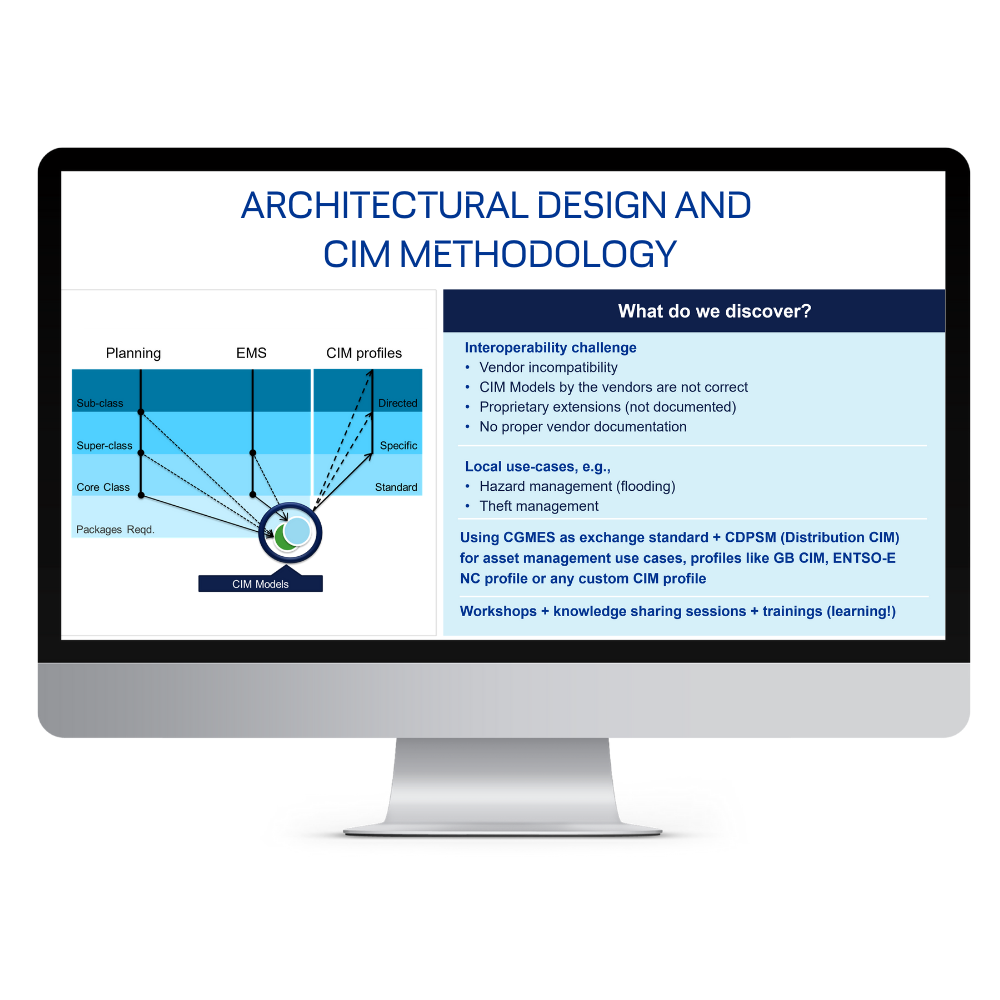
Architectural design and CIM methodology
Challenge: struggling with interoperability challenges—ranging from incompatible vendor implementations to undocumented model extensions and inconsistent CIM usage—needed a structured, standards-based approach to manage data exchange across their systems.
Solution: by applying DNVs architectural methodology, they adopted a standardized framework for managing and exchanging data across the full project lifecycle. This approach ensured consistency from initial requirements through to testing, while aligning technical design with governance needs.Focus area: model governance, architecture alignment, validation and testing.
Value delivered: reduced project risk, accelerated testing cycles, and improved CIM profile quality across systems.
-
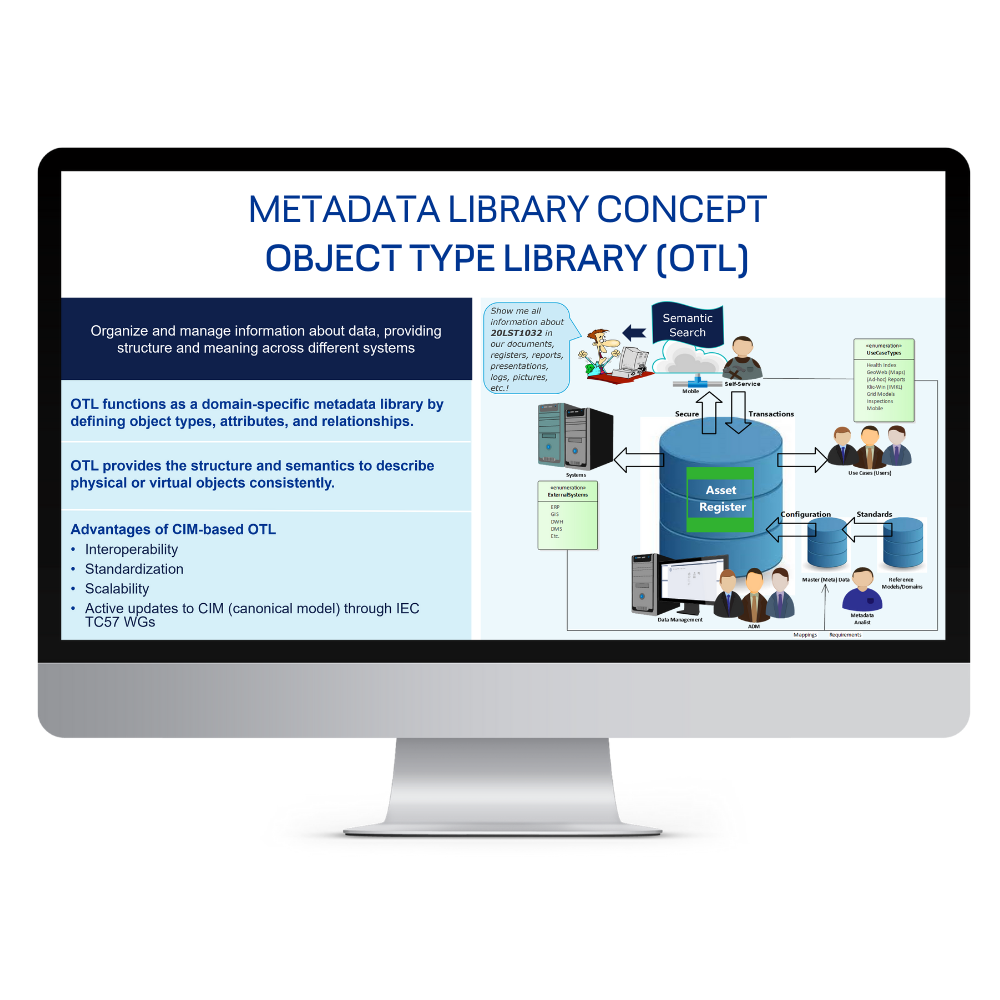
Managing data semantics with CIM-based object type library (OTL)
Challenge: utilities often face challenges in managing metadata across complex systems—leading to inconsistencies, limited reuse, and increased integration costs. Ensuring consistent classification and semantic alignment across functions and components is critical for scalable grid operations.
Solution: DNV´s CIM-based Object Type Library (OTL) uses semantic web technologies to structure and manage metadata. This standards-driven approach supports functional decomposition, property inheritance, and consistent classification. As a globally recognised and evolving standard maintained by active IEC TC57 working groups, CIM provides a stable, future-ready foundation for utility projects.
Focus area: metadata architecture, ontology-driven insights, CIM profile management
Value delivered: structured, future-proof metadata, easier customizations, and alignment with evolving international standards.
How CIM services are powering the future grid
Dive into expert articles and on-demand webinars that illustrate how CIM services are enabling next-generation grid management through advanced data modelling, interoperability, and standards-based integration.



Frequently asked questions
-
Conformance testing ensures your software or system implementation aligns with CIM standards like CGMES 3.0, guaranteeing interoperability.
-
CIM simplifies data integration, reduces operational costs, and improves data governance—essential for modern grid operators.
-
ENTSO-E sets and maintains key CIM profiles (like CGMES) for transmission system operators across Europe. DNV is an accredited conformance testing lab under ENTSO-E.
-
Yes—many utilities create custom profiles to reflect local use cases. DNV helps with both profile creation and validation.
-
CIM provides the data backbone for creating digital twins of power systems, supporting real-time analytics and simulations.


