

Wind-assisted propulsion: Managing safety while regulation takes shape
As wind-assisted propulsion scales across the global fleet, operations are advancing faster than regulation. With IMO guidance still under development, safety today rests on strong operational practice, class approval, and the ISM Code.
Wind-assisted propulsion systems (WAPS) have moved beyond pilot projects. Today, ships equipped with rotors, wings, and sails are trading globally, helping owners cut fuel consumption and emissions while responding to increasingly stringent greenhouse gas requirements. Yet this rapid operational uptake is unfolding faster than binding international regulation is being finalized.
This creates a familiar but critical tension. The technology is already in service and increasing in scale across the global fleet, but the International Maritime Organization (IMO) is still developing harmonized safety guidance. For operators in the space, that gap can feel like uncertainty or risk. In reality, the regulatory signals around WAPS are becoming clearer, and safety processes are already in place through the International Safety Management (ISM) Code, flag state engagement, and classification standards.
WAPS are now firmly on the IMO safety agenda
At the IMO level, wind propulsion and wind-assisted power are now clearly on the safety agenda. The subcommittee on ship design and construction has been formally tasked with developing interim safety guidelines, supported by correspondence group work and progressing towards consideration by the maritime safety committee. While timelines at IMO can be revised, these guidelines are expected to be developed and finalized within the next three to four years.
Importantly, these discussions are not happening in a vacuum. They sit within a wider IMO effort to ensure that new and emerging technologies and fuels are addressed within a broader, coherent safety framework. For WAPS, key developments so far have included their identification as a technology which requires dedicated safety standards, as well as recognition that existing instruments, such as SOLAS, COLREG, stability codes, and other navigational safety provisions, may not fully capture safety hazards specific to the technologies.
The prevailing view in discussions to date is that risks appear manageable when systematically identified and controlled. Attention has centred on well-known risks that can be managed with the right design assumptions, operational controls, and human element safeguards. These include visibility and sensor performance, manoeuvrability and controllability, air draft and port interfaces, stability effects, extreme weather exposure, and crew competence.
Existing frameworks already manage WAPS risks
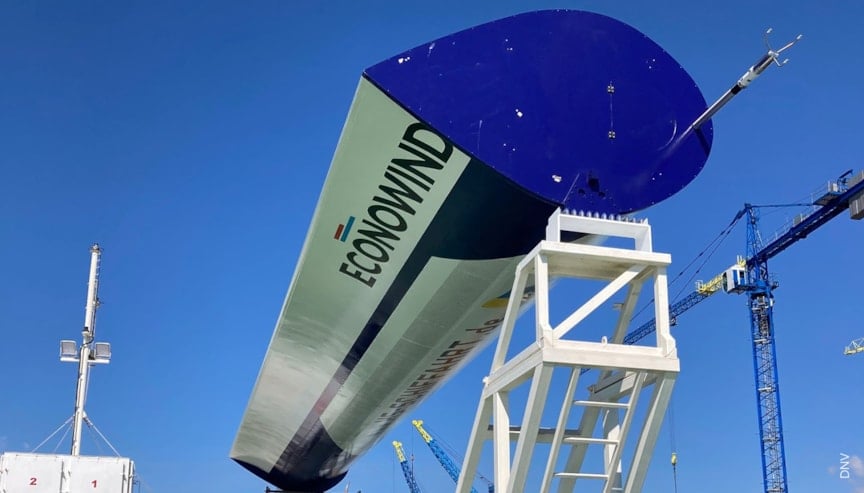
Crucially, the absence of finalized IMO guidance does not mean that WAPS safety is unmanaged. Far from it. Today’s operational safety baseline rests on three pillars: flag state engagement, class approval using established technical standards, and – most fundamentally – the Safety Management System (SMS) under the ISM Code, a mandatory requirement under SOLAS Chapter IX.
Class frameworks – including DNV’s technical standard (DNV-ST-0511) – already address core technical aspects, including structural integrity, fatigue, extreme wind loading, system integration, and operational limits. For installations designed and approved against these standards, future IMO guidance is more likely to bring harmonization than to trigger fundamental changes, and existing WAPS installations are therefore unlikely to be significantly affected.
Where WAPS installations affect visibility in ways that touch SOLAS Chapter V/22, acceptance of equivalent arrangements remains a flag state decision, typically supported by class technical assessments. In practice, guidance such as DNV’s recommended practice for CCTV-based solutions (DNV-CG-0662) is commonly used to support these evaluations.
The ISM Code remains the cornerstone of operational safety for WAPS
What design approval and class cannot do on its own, however, is ensure safe day-to-day operation. That responsibility ultimately rests with the operator. Under the ISM Code, companies are already required to manage safety in a structured, systematic, and continuous way, regardless of ship type or technology. In practice, this means identifying new or substantially changed risks, establishing safeguards, ensuring competence, and maintaining a continuous learning loop. The introduction of WAPS adds new dimensions to these obligations.
Until interim IMO guidance is adopted, the ISM Code will therefore – in conjunction with existing class and statutory frameworks – remain the primary operational safety instrument for managing WAPS-related risks.
IMO is moving towards goal-based safety rules for WAPS
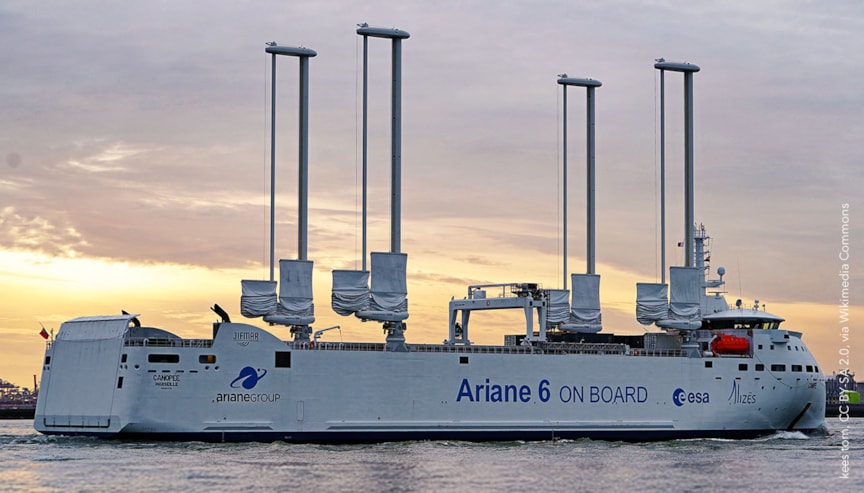
While exact timelines for future regulatory frameworks depend on priorities within IMO, as well as input from member states, the direction of travel is becoming clearer. In the near term, operators should expect that design continues to rely on risk-based approvals supported by class and flag states, coupled with increasing expectations that WAPS installations are explicitly addressed under the ISM Code in the operational phase.
In the medium term, interim IMO safety guidelines are expected to establish a harmonized international baseline. These are likely to be goal based rather than prescriptive, reinforcing expectations for design integrity, safe system behaviour, and operability, rather than introducing detailed, technology-specific rules that are normally covered in class standards. Over time, experience gained through the application of the interim guidelines may inform refinements to existing IMO instruments.
This goal-based approach has clear advantages. It allows regulations to keep pace with innovation, accommodates different WAPS technologies, and focuses attention on outcomes – such as safe navigation, controllability, structural integrity, and emergency response – rather than on prescriptive design solutions.
Most WAPS safety risks emerge at operational interfaces
When evaluating safety considerations for WAPS, a comprehensive approach is fundamental.
In many projects, the most common challenges arise at system interfaces, rather than in the sail or rotor itself. Among these, bridge visibility is typically the first issue to be addressed, followed by sensor shadowing, lighting arrangements, low-speed manoeuvring, depowering response times, port procedures and interfaces, and safe access.
From a design perspective, DNV technical guidance around WAPS indicates that decisions made early – such as whether to go “WAPS ready” or fully fitted on newbuilds, and how loads, foundations, and control philosophies are defined – are critical to identifying and addressing WAPS-specific risks at the design stage, with direct implications for operational safety. For retrofits, the emphasis should be on how the system interacts with existing ship arrangements and routines.

Operational evidence builds trust with authorities
For shipping executives and technical leaders, the real question now is not whether WAPS can be used safely but how seamlessly they can be integrated into their fleets without operational friction or compliance noise. In practice, operational integration has emerged as the primary concern for owners, and it depends more on organizational execution than on regulation.
Importantly, WAPS should be treated as a material operational change, not as a bolt-on efficiency device. That means including the technology in management-of-change processes, assigning clear ownership both on board and ashore, and ensuring that operating limits, bridge procedures, port interfaces, emergency response, and maintenance activities are explicitly covered in the SMS. Experience to date also shows that well‑implemented SMS frameworks support not only safety but also the effective and confident use of WAPS in operation, helping crews capture their benefits reliably as competence and experience build.
Companies that can clearly define their operating envelope, document why it is safe, and demonstrate competence management and learning will find it far easier to engage with flag states, auditors, and port state authorities as regulatory expectations mature.
More consistent inspections will reward prepared shipowners
As IMO guidance develops, approval, inspection, and enforcement procedures are also likely to become more consistent. A common international reference point typically reduces variability between administrations and PSC, provided ships can demonstrate alignment between design approval, operational limits, and SMS implementation.
This creates an opportunity for shipowners. The interim period can be used to prepare a coherent WAPS safety package – as part of the SMS – that travels with the ship, including approvals and certificates, documented operating envelopes, bridge and port procedures, training matrices, drills, and incident reporting practices. Done well, this will make interactions with authorities more straightforward, enabling shipowners to demonstrate a coherent safety story, rather than explaining their technology from scratch.
The way forward for WAPS safety
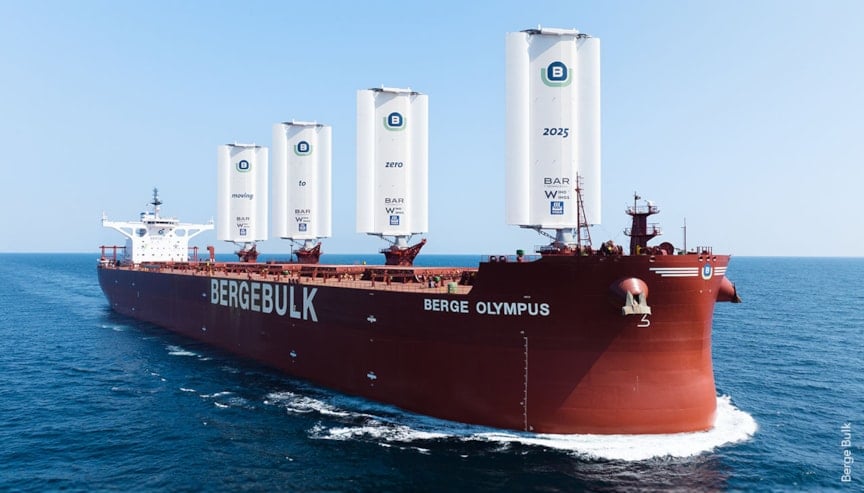
The regulatory trajectory for wind-assisted propulsion is stabilizing and starting to become more predictable. Over the next few years, IMO is expected to provide interim guidance that harmonizes procedures and expectations, drawing on the increasing volume of operational evidence now being gathered.
As this transition takes place, companies that take the lead will be those with the best organizational and leadership processes in place. Shipowners who integrate WAPS into normal fleet operations, competence systems, and learning loops will scale more smoothly and be well aligned with the direction of regulation.
Decisions taken today will have ripple effects in the future, not only for individual company performance but also for how future IMO guidance is shaped and applied in practice.
As with so much else in shipping, progress depends on collaboration. If the industry works together, shares experience, and embeds safe WAPS operations today, the regulation that follows will be proportionate, predictable, and grounded in operational reality.