How RES unlocks broader wind farm design exploration
Using the WindFarmer API, RES can evaluate more design possibilities and respond faster as project constraints change.
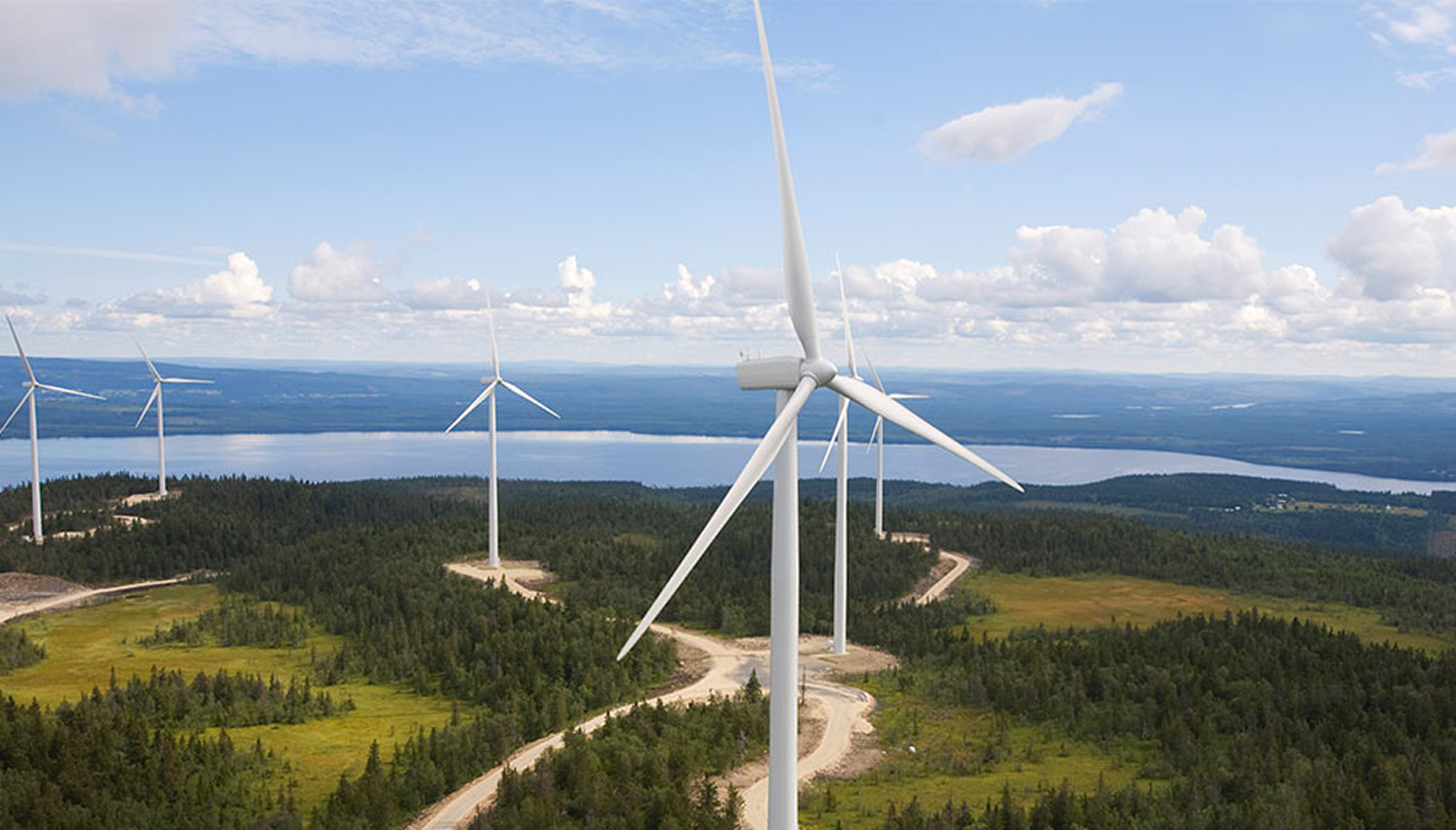
Renewable energy projects in general – and wind farms in particular – are becoming larger and more complex. It is now common to see individual projects with over two hundred turbines. But design teams still need to deliver reliable, bankable designs that balance performance, constraints and cost.
About the customer
RES is the world’s largest independent renewable energy company. It has over 40 years’ experience in developing, building and operating wind, solar, storage and transmission assets. With over 4500 employees across 24 countries, RES has delivered over 29 GW of renewable energy projects. It continues to work towards a future where everybody has access to affordable zero carbon energy.
Finding the best design among countless possibilities
Wind farm design requires teams to balance turbine placement, model selection, hub heights, environmental restrictions, noise limits, grid capacity and project economics. As projects grow from 10’s to 100’s of turbines, the interactions between these variables create a vast solution space. Manually assessing only a limited number of layouts can leave potentially stronger designs unexplored. The challenge becomes greater as land access, environmental constraints, turbine availability and other project assumptions change during development. RES needed a way to evaluate more design possibilities and repeatedly optimise projects without relying on time-consuming, scenario-by-scenario analysis.
Programmatic access to trusted energy yield modelling
The WindFarmer API allows RES to model wind yields using WindFarmer's Annual Energy Production (AEP) model, which is aligned with DNV’s methodology. RES has integrated it into its internal platform, layering on proprietary project knowledge, constraint models and optimization algorithms to create an automated workflow guided by human expertise.
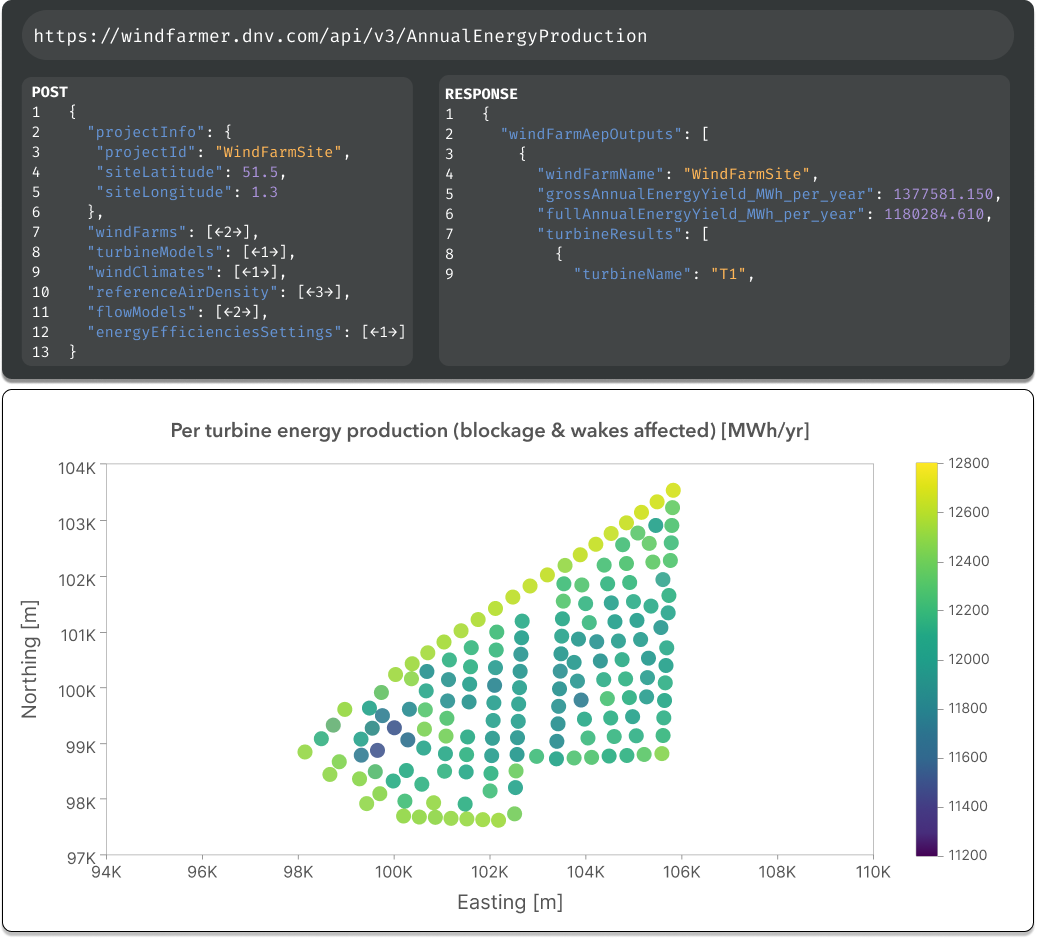
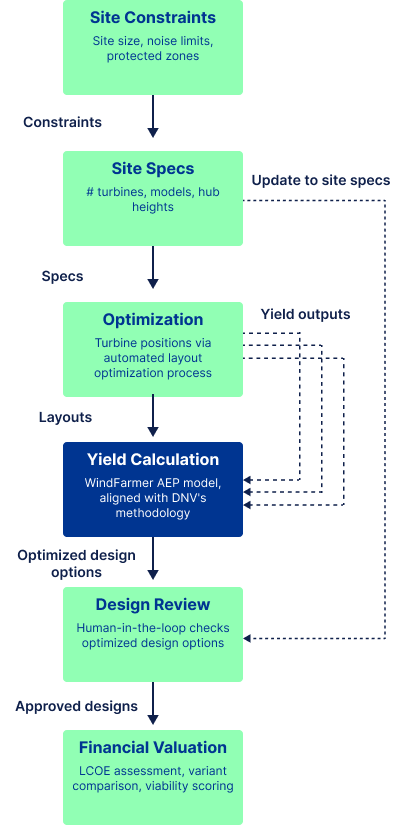
First, RES defines site specifications and constraints. The RES platform then assembles candidate designs including turbine positions, turbine models and hub heights. The WindFarmer API returns the AEP for each design – accounting for wake effects, wind resource and turbine performance – feeding back the results to the platform which adapts the candidate design accordingly. These two steps are repeated in an automated loop until an optimized design is found. A human expert manually validates the outputs, either restarting the workflow with updated specifications or approving the design for financial evaluation.
As a result, RES can explore the solution space far more thoroughly, evaluating a volume of design options that would not be feasible through traditional desktop processes.
Impact
- Broader exploration of potential wind farm designs
- Faster re-optimisation as project constraints change
- More engineering time to assess trade-offs
- Better-informed project design decisions
Key stats:
- Hundreds of potential design variants evaluated programmatically
- Large projects comprising up to 200 turbines considered
- WindFarmer API in use since 2018


