Opportunities for industrialization and standardization in the North Sea offshore wind market
Industry study phase 1 completed: public summary now available

The joint industry project (JIP) on industrialization and standardization in North Sea offshore wind has now been completed. The study investigated how greater standardization and industrialization across the offshore wind supply chain could help reduce costs, improve efficiency, and accelerate deployment. DNV is currently engaging with industry stakeholders to define potential future phases of the JIP.
Project timeline: phase 1 complete, investigating potential future phases
| Phase | Status |
| Industry engagement and project development | Completed |
| JIP launch and partner onboarding | Completed |
| Phase 1 technical assessment and modelling | Completed |
| Final reporting and publication of public summary | Completed |
| Define potential future phases | Ongoing |
The project commenced in 2025, delivered its first-phase findings to participating industry partners in July 2026 and released a public summary report in September 2026.
Industry challenge: managing the growing pressures of offshore wind turbine upscaling
For more than a decade, offshore wind has been driven by continuous turbine upscaling. While this has delivered significant cost reductions, it has also increased pressure on vessels, ports, foundations, manufacturing capacity, and installation logistics.
JIP solution: exploring cost reductions through offshore wind industrialization and standardization
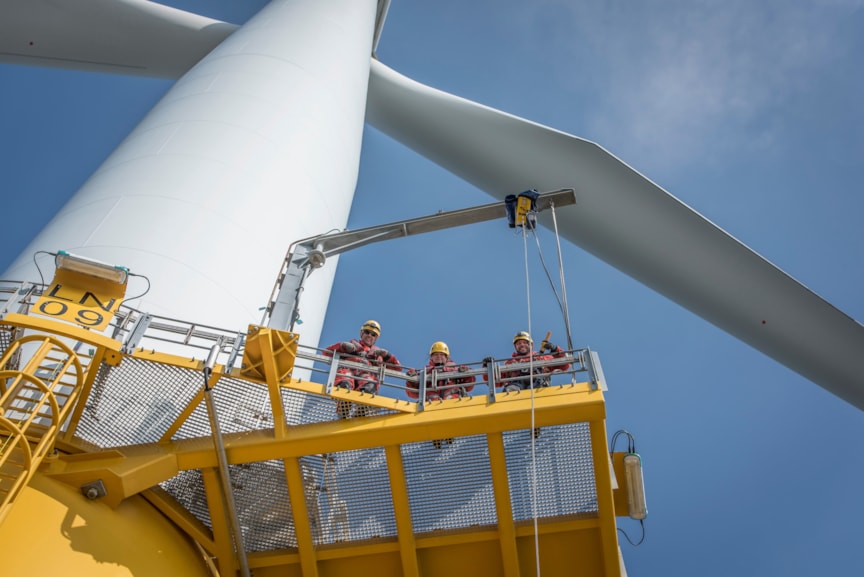 The JIP study explores whether periodically stabilizing wind turbine growth can unlock additional cost reductions through greater industrialization and standardization, while supporting the ambitious offshore wind deployment targets planned for the North Sea.
The project combined industry expertise with unique quantitative modelling to assess how greater industrialization and standardization could improve supply-chain performance, reduce costs and support the delivery of Europe's offshore wind ambitions.
Key findings: industrialization and standardization could significantly reduce offshore wind costs
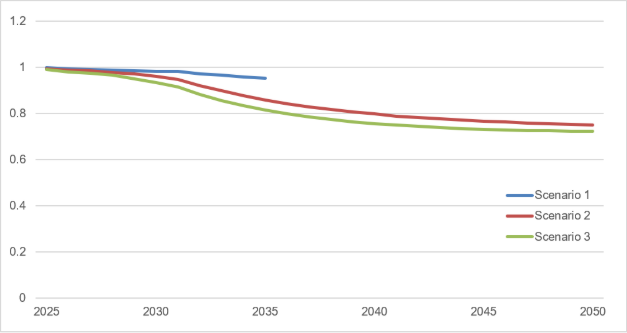
The JIP concludes that industrialization and standardization could become one of the largest remaining levers for reducing offshore wind costs. Quantitative modelling indicates that coordinated improvements across the European offshore wind supply chain could reduce the Levelized Cost of Energy (LCoE) by more than 20% within the next 15 years, with reductions of approximately 20-25% by 2040 and up to 25-28% by 2050 under favorable market conditions.
Sector value: supporting more predictable and scalable offshore wind growth
The study provides insight for developers, OEMs, ports, vessel operators, investors, policymakers, and supply chain companies seeking to accelerate offshore wind deployment.
Key benefits include:
- Improved understanding of industrialization opportunities across the value chain
- Better visibility of supply chain bottlenecks
- Support for strategic investment decisions
- Input to future industry standardization discussions
- Perspectives on reducing deployment risk while maintaining competitiveness
The findings contribute to a broader dialogue on how the offshore wind sector can achieve ambitious North Sea deployment targets while strengthening supply chain resilience and profitability.
Public summary available
The findings are available in the public summary report that can be downloaded here.
Request a copy to learn how increased industrialization and standardization could support future North Sea offshore wind growth.
Industry partners
Participating organizations included:
- EEW Special Pipe Constructions GmbH
- Smulders-Eiffage N.V.
- Fred. Olsen Windcarrier ASA
- Jan de Nul N.V.
- Van Oord Marine and Dredging Contractors
- Groningen Seaports
- Vattenfall
- Vestas Wind Systems A/S
Join the discussion on future phases
Building on the strong foundation established in phase 1, DNV is engaging with industry stakeholders to define potential future phases of the JIP. These follow-on studies would expand supply-chain participation, further develop the quantitative modelling framework, and investigate additional opportunities to improve industrialization, competitiveness, resilience, and cost efficiency across the offshore wind sector. Organizations interested in helping shape the next phase of this work are encouraged to join the discussion.
Examples of potential future topics include:
- Standardization of offshore wind farm capacities and layouts
- Industrialization opportunities within foundations, turbines, installation equipment, ports, and logistics
- Supply chain resilience and manufacturing scaling
- Installation vessel and port infrastructure requirements
- Industrialization pathways for floating offshore wind
- Regional expansion beyond the North Sea and implications for global deployment
- Environmental and broader energy-system impacts of standardization strategies
Help define the next chapter of offshore wind industrialization and standardization. Register your interest today.