

What IMO’s MASS Code means for remote control and autonomy at sea
The adoption of the MASS Code marks an important step for remote control and autonomy in shipping. By providing a common framework for approval and assurance, the Code creates the foundation for wider adoption while allowing industry and regulators to learn through experience.
For years, maritime autonomy has been framed as a question of technology: what can ships do with limited or no human intervention, and how quickly can those capabilities be scaled? With the adoption of IMO’s Maritime Autonomous Surface Ships (MASS) Code, the conversation has shifted.
The MASS Code introduces, for the first time, a global regulatory framework for ships operating with remote control and autonomous functions. Just as importantly, it signals a transition from isolated projects and pilot cases to a more structured approach to designing and operating them.
Risk assessments and flag state involvement remain central to the approval process, but the MASS Code provides a common, structured basis for assessing new operating concepts.
An enabler for wider adoption
The MASS Code has often been described as a regulatory milestone. It is a goal-based and technology-neutral framework that defines outcomes that must be achieved rather than prescribing specific technical solutions. It establishes the principles and requirements that must be satisfied to ensure safe operation.
This distinction is critical. Autonomous operations can take many forms, from decision-support systems on board to fully remote-controlled vessels. The Code reflects this diversity by applying not only to remotely controlled or autonomous ships but also to individual functions. It recognizes that autonomy will be introduced incrementally, function by function and system by system.
In doing so, the MASS Code provides a common framework for evaluating safety and supporting the wider adoption of remote control and autonomous functions.
Why the MASS Code is voluntary
One of the most frequently raised questions is why the MASS Code has been adopted as a non-mandatory instrument. In a regulatory environment often associated with strict compliance, this may appear counterintuitive. In reality, it reflects the diversity of possible applications and the need to let safety frameworks mature through practical experience.
The voluntary approach is therefore strategic: it gives the industry a common set of principles while preserving the flexibility needed to assess different concepts and solutions, and to help innovation scale faster. Central to this approach is the so-called experience-building phase, during which data from projects and operations can be collected, analysed, and shared to further improve the Code.
In practical terms, this means that flag states and their authorized classification societies remain at the centre of approvals. Projects will continue to be assessed case by case, with safety demonstrated through risk assessment, documentation, and validation.
The Code is not a one-size-fits-all answer. It provides structure and a baseline for more standardized, streamlined approvals, while still requiring each concept to be supported by a robust and well-documented approval case. At the same time, it creates the foundation for a future mandatory framework.
From ships to systems – expanding the regulatory perspective
A second important aspect is that the MASS Code brings the wider operating system into scope, beyond the ship itself. Traditionally, maritime regulation, aside from a few exceptions, has centred on the vessel, focusing on its design, equipment, and operation.
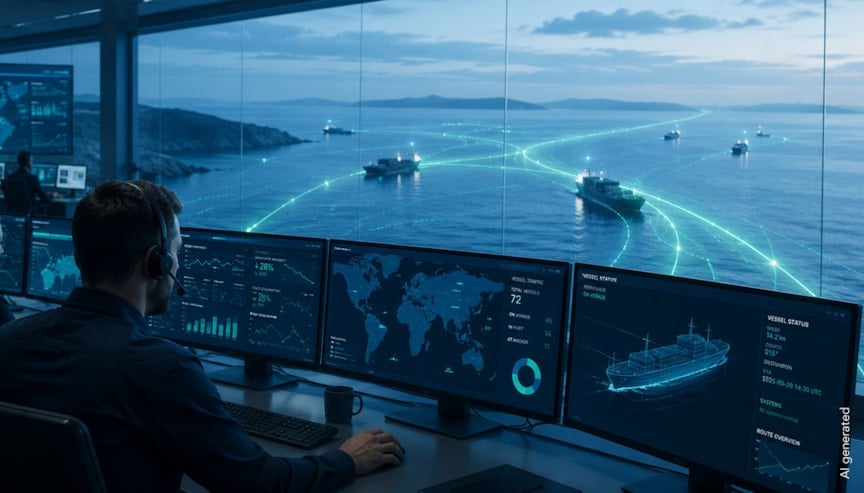
With the MASS Code, the regulatory scope expands to reflect the operational reality of remote control and autonomy. The Code recognizes the vessel as part of a wider operating system, where safety depends on the ship, the remote operations centre (ROC), the digital link between them, and the people operating across both ends of that interface.
This is particularly relevant for remote operation concepts involving essential ship functions. The interaction between ship and shore becomes a key safety consideration, and the ROC is recognized as an integral element of the overall system rather than just an operational support function. Safety and security are no longer just questions of onboard capability. Managing risk depends on how multiple components interact in real time.
This means that roles, responsibilities, and interactions between the ship and the ROC must be clearly defined and verified as part of the safety and approval process. As a result, the ROC becomes part of the overall assurance framework and must be documented, verified, and certified.
Core principles for autonomous operations
The MASS Code is built around goals, functional requirements, and expected performance. Together, these provide a common basis for assessing autonomous and remotely controlled functions, with the objective of demonstrating a level of safety equivalent to conventional operations.
First, the Code requires safety to be demonstrated through structured risk assessment. Compliance is demonstrated by showing that the operating concept, functions, and risks have been understood and controlled. Concepts of operation, hazard identification, operational limits, fallback arrangements, and verification evidence therefore become central to the approval case.
Second, human involvement and responsibility remain central. Remote control and autonomy change how responsibility is exercised but do not remove it. The Code requires that a master remains responsible for the ship and capable of intervening when needed, even when not physically on board. The MASS Code therefore provides a framework for defining roles, competence requirements, and intervention capability.
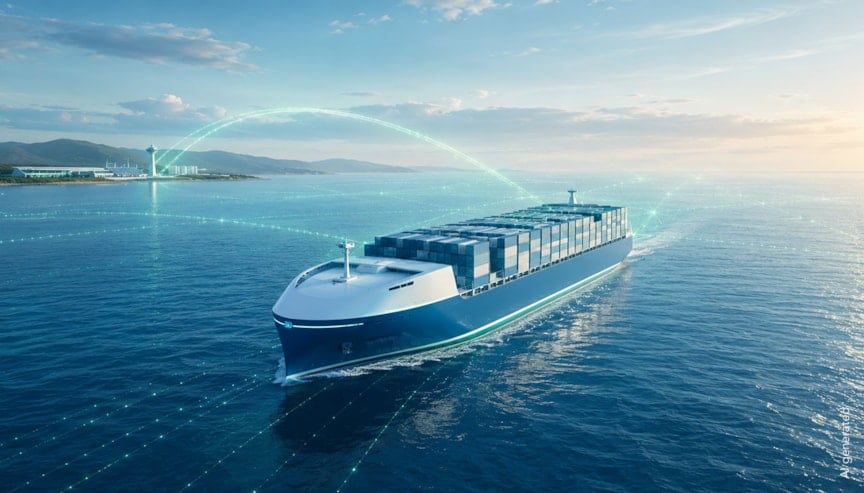
Third, the Code adopts a functional, goal-based approach. It defines what systems must achieve, for example in navigation, connectivity, or emergency response, without dictating how those functions are implemented. This allows the Code to be applied across different technologies and operating concepts, while maintaining a consistent safety benchmark.
Finally, the Code recognizes that learning is part of the process. The experience-building phase provides a framework for collecting and sharing operational experience so that it can inform future development of the Code and support the transition towards a mandatory global instrument.
DNV assurance frameworks and the MASS Code: Distinct roles, complementary value
The MASS Code raises an important question: how can a global regulatory framework be translated into practical assurance for specific ships, functions, and operating concepts? This is where the industry’s existing work on remote control and autonomy becomes particularly relevant.
Over the past decade, DNV has developed frameworks for assessing and assuring remote-control and autonomous operations, covering concept qualification, system qualification, class notations, remote operations, management systems, and operator competence. The objective is to provide a structured and repeatable way to assess new operating concepts while maintaining safety.
These frameworks serve a different purpose from the MASS Code. The Code establishes common expectations for the safe, secure, and environmentally sound operation of ships with remote-control and autonomous functions, defining goals, functional requirements, and expected performance.
DNV’s frameworks operate at a more practical level, translating those expectations into project-specific assurance cases.
The relationship between the MASS Code and these frameworks is therefore complementary. The Code provides the regulatory direction and common language, while assurance frameworks provide the tools for demonstrating how specific concepts meet those expectations. As experience grows through the Code's experience-building phase, regulatory development and practical implementation will continue to inform one another.
The road ahead: Building confidence through experience
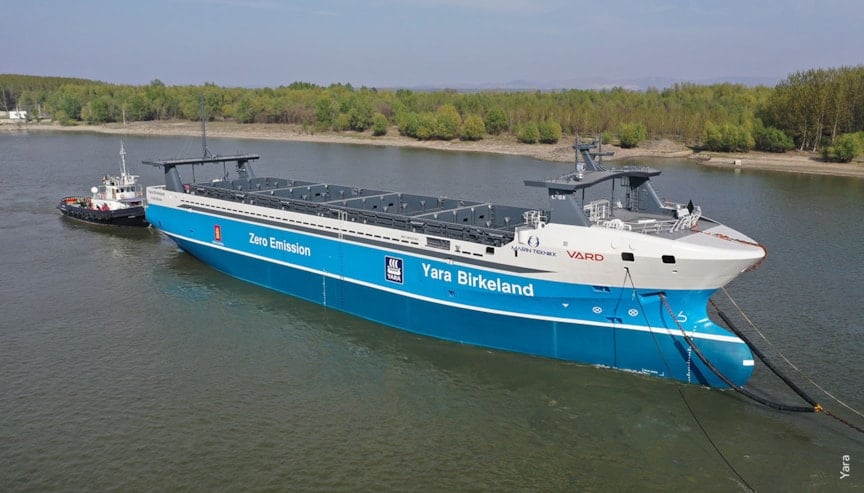
Looking ahead, the most important phase for the MASS Code is not its adoption, but its application. The experience-building phase will play a central role in shaping how the framework evolves, providing the evidence needed to refine requirements and support eventual mandatory adoption. For that reason, industry participation and engagement will be critical to ensuring that practical experience informs future development of the Code.
Important questions remain around the practical allocation of responsibility between the ship, master, and remote operations centre; human oversight and intervention; system performance, connectivity, and fallback arrangements; data access and use of operational experience; and specific areas such as search and rescue, cybersecurity, and cross-border operation. Addressing these issues will require continued collaboration between industry, regulators, and class. Through independent assurance, technical expertise, and structured verification, class can help turn experience from projects and operations into clearer expectations for the future development of the MASS Code.
Autonomous shipping is unlikely to be established through a single breakthrough. Adoption is more likely to be gradual, with decision-support tools, remote operation centres, and bounded remote-control functions becoming widespread before fully autonomous international shipping becomes commonplace. As experience grows, regulators and industry will gain a better understanding of how these technologies perform in practice and how they can be safely integrated into existing operations.