Buying SaaS for utility workflow and program management
By Todd Davidson, Director Business Development, North America, Energy Systems at DNV

On paper, everything is working. Applications are getting submitted. Programs are running. Reports are being delivered. But inside the operation, teams feel the strain. Work is spread across spreadsheets, inboxes, and disconnected systems. Staff spend more time tracking status than moving work forward. Customers ask simple questions - “Where is my application?” - and answers aren’t easy to find.
This is how complexity builds. Not from one broken process, but from dozens of small workarounds layered over time. Each program adds more rules, more forms, and more handoffs. Eventually, the system isn’t really a system at all - it’s coordination by (hard) effort.
At some point, that stops scaling.
When the model breaks
The breaking point is rarely dramatic. It shows up as delays, rework, and rising frustration.
Program applications come in incomplete because the process isn’t clear. Analysts check for missing information manually. Engineers review documents in isolation. Approvals move through email. Customers and contractors have little visibility into what’s happening.
As volumes grow, whether from energy efficiency, electrification, distributed energy resources, or new program launches, the same issues compound. Teams are asked to do more with the same people, the same tools, and tighter timelines.
That’s when the conversation changes. This is no longer about improving workflow, it’s about whether the current operating model can keep up.
This is where the need for a workflow or program management platform come into focus, not as a technology upgrade, but as a way to get work done more efficiently and effectively.
Don’t start with software. Start with outcomes.
Many technology evaluations stall because they begin with features.
Teams compare dashboards, forms, and technical capabilities without agreeing on what actually needs to improve. That creates long, unfocused buying cycles.
A better approach is more direct: define outcomes first.
What are the elements of an ideal system?
- Applications should move faster from submission to approval
- Data should be more complete at intake
- Customers should get clear, consistent updates
- Staff should spend less time coordinating work
- Leadership should have real-time visibility
- The organization should scale without adding staff
This step creates alignment early. It gives the evaluation a purpose and keeps the focus on business impact, not software features.
What actually matters (and why)
Once outcomes are clear, it becomes easier to focus on what really matters in a platform.
Configurability is critical because processes don’t stay still. Programs evolve. Rules change. New offerings are introduced. Teams need to adjust workflows, forms, and logic without relying on constant development work.
End-to-end workflow support matters because the work itself is connected. Intake, review, approval, inspection, and payment are part of one flow. Systems that manage only pieces of the process create gaps that teams must fill manually.
Customer experience matters because it drives everything upstream. If the application process is confusing, errors increase. Errors create rework. Rework slows everything down. A clear, intuitive portal prevents issues before they start.
Integration matters because no system operates alone. Customer data, billing, metering, mapping, and financial systems all play a role. A platform must connect cleanly, or teams will spend time moving data manually between systems.
Visibility matters because leadership needs to act in real time. Without clear dashboards and reporting, issues are discovered too late. Strong visibility turns workflow into something that can be actively managed.
Auditability matters because accountability is required. Every step, decision, and approval must be traceable. This isn’t just about compliance—it’s about confidence in the system.
Automation matters because manual work doesn’t scale. Routine tasks like validation, routing, and notifications should happen automatically, allowing teams to focus on higher-value work.
Cost matters over the long term. The real question isn’t just what the system costs to buy, but what it costs to run, maintain, and adapt over time.
These aren’t abstract requirements. They reflect how programs actually operate and are evaluated day to day.
How to prioritize the buying process
The challenge isn’t understanding what matters. It’s knowing how to move forward without getting overwhelmed. Strong teams take a structured approach:
Start with a narrow scope. Focus on one or two high-impact use cases – DG interconnection, rate enrolment, etc. Then zero in on core workflows like application intake, eligibility review, and customer communication. This keeps the evaluation grounded in real work.
Define your users and workflows clearly. Take to the whiteboard. Who is involved? What are they responsible for? Where do handoffs and exceptions occur? This clarity exposes gaps early and keeps vendors focused on realistic use cases.
Align stakeholders upfront. Operations, IT, security, finance, and program teams all have a role in the decision. Early alignment prevents delays later.
Use scenario-based evaluations. Ask vendors to walk through real world workflows based on best practices gleaned from years in the business. This reveals how the system performs under real conditions.
Prioritize configurability over customization. Systems that require extensive custom development are harder to maintain and adapt. Look for platforms that allow your team to make changes directly.
Be explicit about integrations. Identify the systems that need to connect, how data should flow, and how often. This reduces risk during implementation.
Taken together, these steps create a simpler, more disciplined buying process - one that stays focused on outcomes and avoids unnecessary complexity.
From selection to transformation
Buying the platform is only the midpoint. The real change happens during implementation.
This is where teams decide whether to recreate old processes or improve them. The most effective teams simplify where possible and standardize where it makes sense. Not every legacy exception needs to carry forward.
A phased rollout helps build momentum. Start with a focused set of workflows, prove the model, and expand from there.
Training should be tailored by role. Customers, trade allies, administrators, engineers, and customer teams all use the system differently. Adoption improves when the experience matches how they really work.
When done well, the results are clear:
- Applications are more complete from the start
- Work moves through consistent, predictable steps
- Customers receive clear updates
- Managers see performance in real time
- Teams spend less time coordinating and more time executing
The system doesn’t remove complexity - but it makes it manageable.
The real decision
At its core, this isn’t a software decision. It’s a decision about how work should move through your organization.
Utilities that focus on outcomes, prioritize the right capabilities, and follow a disciplined buying process don’t just solve today’s problems. They create an operating model that can support future programs, changing requirements, and continued growth.
Those that don’t often end up rebuilding the same processes again a few years later.
Where to start
If you’re beginning this process, the most valuable step is to ground the conversation in your specific needs.
What isn’t scaling today? Where are the bottlenecks? What outcomes matter most over the next 12 to 24 months?
From there, the path becomes much clearer.
If it would be helpful, we’re happy to connect, walk through your priorities, and share a copy of our buyer’s guide. It’s designed to help you structure the process, ask the right questions, and make a decision you won’t have to revisit.
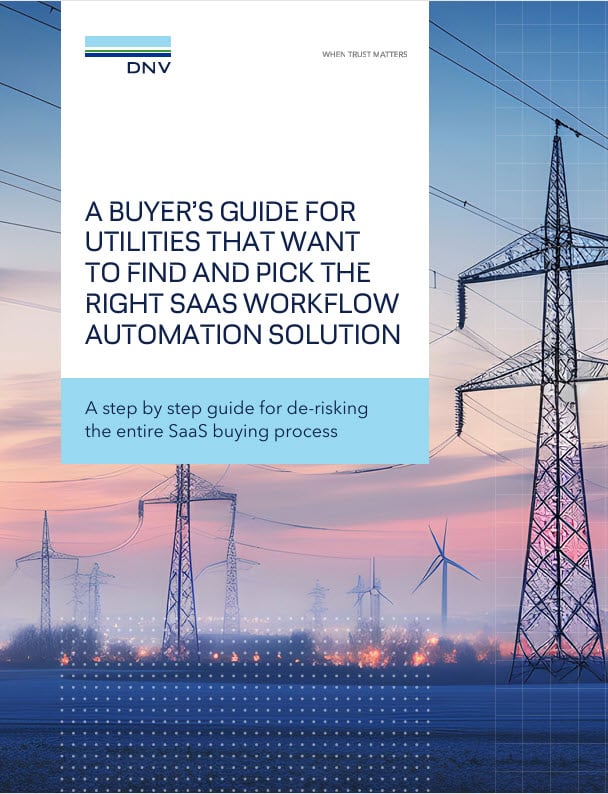
Request a copy of our buyer's guide
If you are currently navigating this process or anticipating a new program launch, we want to help you cut through the noise. We've put together a comprehensive buyer's guide designed to help you structure your evaluation, ask the right questions to vendors, and build a procurement process you won't have to revisit in a few years. Click here to request your copy.