Bullish outlook for tanker market amid global uncertainties
Shifting trade patterns, geopolitical disruptions, and longer voyages have led to sustained tonne-mile growth in the tanker market, driving a surge in freight rates. With the global fleet ageing and the need for higher energy-efficient ships increasing, a wave of newbuild activity is expected over the coming years.
The tanker market has entered 2026 on a strong footing, driven by a convergence of geopolitical shifts, resilient oil demand, and tightening vessel supply. Freight rates surged to levels more than 60% above the 10-year average by late 2025, with very large crude carrier (VLCC) earnings peaking above $100,000/day, underscoring the bullish tone across the segment.
“Longer voyage distances, driven by sanctions and subsequent trade realignments, have tightened supply and extended tonne-mile demand, propelling freight rates far beyond historical averages,” says Catrine Vestereng, SVP and Global Business Director for Tankers at DNV. “With oil demand remaining resilient, these factors are combining to create a market outlook that is both promising and complex, setting the stage for a pivotal year in the tanker segment.”
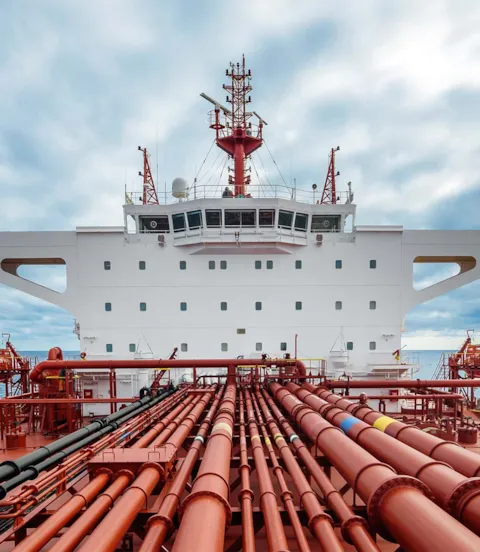
Shifting geopolitical landscape
This strength is underpinned by profound changes in global trade flows. Geopolitical uncertainty remains a defining feature of the tanker market in 2026. Sanctions on Russian crude and refined products have redirected flows away from traditional short-haul routes, creating longer voyages and tightening oil and vessel supply.
“The geopolitical landscape has created an extremely complex environment for tankers,” says Vestereng. “Changing trade patterns – most notably increased imports to China and India from the Middle East and the Atlantic Basin instead of Russia – have resulted in vessels covering much longer distances, pushing tonne-mile demand to record highs.”
By the end of 2025, vessel capacity utilization exceeded 90%, lifting freight rates well above historic norms, with VLCC and Suezmax rates both standing out at over 60% above 10-year averages.
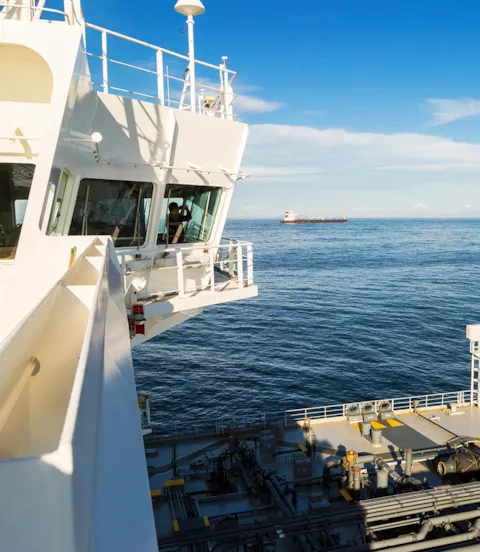
Resilient oil demand driving seaborne trade
These factors are being reinforced by sustained global demand for crude oil and oil products, and low oil prices stemming from the production oversupply. China stands out as the main driving force, with over 1 million barrels per day (Mb/d) of new refinery capacity added since 2020 and a further 1.3-1.5 Mb/d set to come online before the end of the decade.
“Most of China’s imports arrive via seaborne trade, reinforcing the critical role of tankers in global energy logistics,” says Nicolai Hansteen, Tanker Market Specialist and Business Development Manager at DNV. “India is also expanding its import footprint, further strengthening tonne-mile demand and sustaining high utilization rates across the fleet. These dynamics ensure that, despite long-term decarbonization trends, the near-term outlook for oil transport remains bullish.”
Bullish tanker market fuelling surge in newbuilds
After a surge in orders during 2024, when newbuild orders reached their highest levels in the last decade at around 33 million gross tonnes, the pace moderated to around 20 million gross tonnes in 2025. Nonetheless, driven by a bullish tonne-mile market and high freight rates, the tanker newbuild market is entering a critical phase, and the stage is set for a possible next major tanker newbuild cycle.
“While there are a number of factors at play, the next newbuild cycle will likely be driven by an acute need for more capacity on the market,” says Hansteen. “The current orderbook stands at about 17% of the fleet and this is insufficient to fully offset ageing tonnage, particularly in the VLCC and Suezmax segments.”
While newbuild prices remain elevated, albeit slightly softened recently, improving yard slot availability in Asia, particularly China, is expected to support steady ordering activity through 2026 and beyond. In the longer term, this is likely to be sustained by elevated freight rates, incentivising further investment despite high newbuild prices.
Energy efficiency takes the lead with tanker newbuilds
While decarbonization remains a defining challenge for shipping, tanker owners are taking a pragmatic route when it comes to newbuilds. Rather than investing in alternative fuel propulsion, which carries high upfront costs and uncertain payback, owners are focusing on proven energy-efficiency measures that deliver immediate gains.
“Right now, the priority is on technologies that reduce fuel consumption and emissions without disrupting operational flexibility,” says Vestereng. “We’re seeing widespread adoption of advanced propeller designs, and silicon hull coatings, alongside systems like waste-heat recovery and shaft generators. Variable frequency drives are becoming standard, and shore power connections are appearing on smaller product tankers to cut emissions in port. Scrubbers remain standard equipment for the bigger vessels, mainly to reduce the fuel expenditure.”
Other measures include optimizing auxiliary engines and introducing peak-shaving solutions to manage power demand more efficiently. More radical options, such as wind-assisted propulsion technologies, remain on the sidelines due to long payback periods and operational complexity. In the longer term, owners see biofuels as a practical and tangible bridge to meet tightening emissions targets, leveraging existing engine designs rather than committing to alternative-fuelled engines in the newbuild phase, or costly retrofits for the existing fleet.
Supply strain extends vessel age thresholds
As the tanker market tightens, the fate of older vessels is under scrutiny. Charterers have traditionally capped age at 20 years, but supply constraints have pushed limits to 25 in some trades. “Oil majors remain the most restrictive, with rigorous vetting, while traders are more lenient,” says Vestereng.
This shift comes against the backdrop of an ageing global fleet. By the end of 2025, 23% of all tankers were over 20 years old, and 45% were 15 years or older, up from 36% a decade ago. In the crude segment, 40% of VLCCs and Suezmaxes are now older than 15 years, while in the Aframaxes segment the ratio is over 45%.
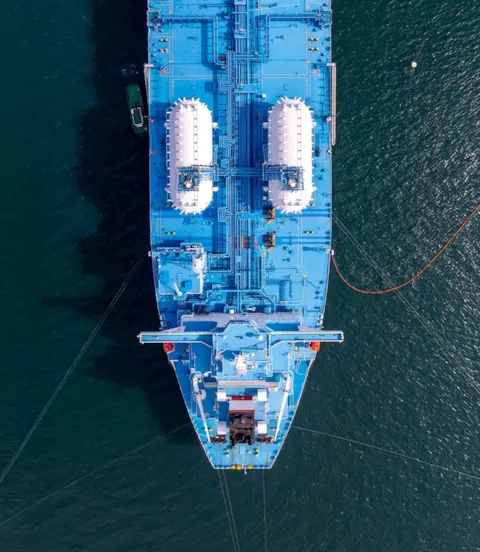
Older tonnage faces rising costs and emissions challenge
“This ageing trend has real operational consequences,” continues Vestereng. “Older vessels consume more fuel, emit more greenhouse gases, and face higher maintenance costs, making them increasingly unattractive for charterers and environmentally sensitive cargo owners.”
For owners, scrapping decisions hinge on economics. Elevated freight rates and weak demolition prices have delayed retirements, but once earnings ease, a significant wave of scrapping is inevitable as efficiency and decarbonization goals take priority. Until then, older ships may linger in storage or sanctioned trades, but their role in regulated global shipping is rapidly fading.
Added safety concerns from the sanctioned fleet
Alongside the mainstream market, the continued rise of the sanctioned fleet remains a major concern for regulators and industry stakeholders. These vessels, mainly operated out of Russia, Iran, and Venezuela, operate outside normal compliance frameworks, without proper insurance or monitoring, creating significant safety and environmental risks. Many of these ships are well beyond 20 years old, compounding worries about structural integrity and operational reliability.
“The lack of oversight in this segment is troubling,” says Vestereng. “We’re talking about vessels that fall outside normal class, statutory and vetting inspection with minimal maintenance and no insurance if something goes wrong. This is particularly concerning for the crew on board these vessels who may not be aware about the safety risks they are exposed to.”
While high freight rates have kept some older tonnage active in sanctioned trades, their presence underscores the urgent need for stricter enforcement and transparency. As mainstream charterers tighten age limits and prioritize efficiency, the sanctioned fleet stands in stark contrast, highlighting the divide between regulated and unregulated operations in global tanker shipping.
Navigating opportunity and risk in a complex tanker market
As 2026 unfolds, opportunity lies ahead for stakeholders in the tanker market, but it comes against a backdrop of risk and uncertainty. Elevated freight rates, resilient oil demand, and shifting trade patterns continue to underpin a bullish outlook, while structural changes – driven by fleet renewal, decarbonization pressures, and evolving charterer requirements – will shape long-term strategies. At the same time, geopolitical uncertainty, as highlighted by recent developments in Venezuela, underscores the unpredictability of global energy flows and the need for agility.
“The fundamentals are strong, but this is not a market for complacency,” says Vestereng. “Owners and operators must navigate a fine balance between capitalizing on today’s opportunities and preparing for tomorrow’s regulatory and geopolitical challenges.”


- Shutterstock / Vallehr
- Shutterstock / Anatoly Menzhiliy
- DNV
- S&P, December 2025
- Shutterstock / Mayy Contributor